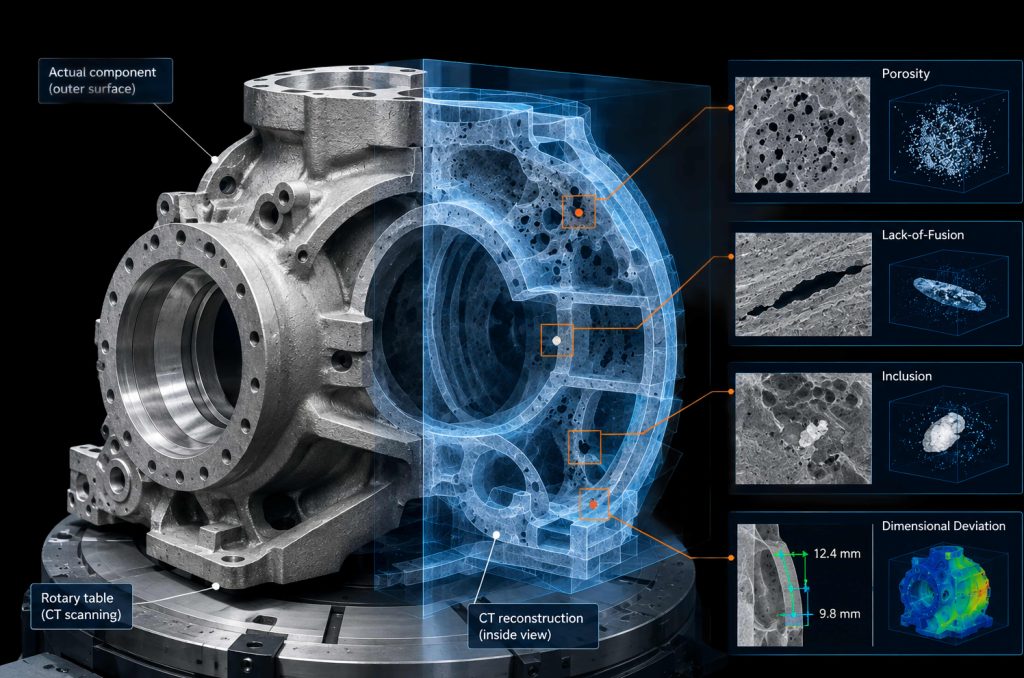
CT Inspection for Large Castings and Turbine Housings
A large engine block or turbine housing can pass a standard radiography inspection and still fail in service months later.


A large engine block or turbine housing can pass a standard radiography inspection and still fail in service months later.
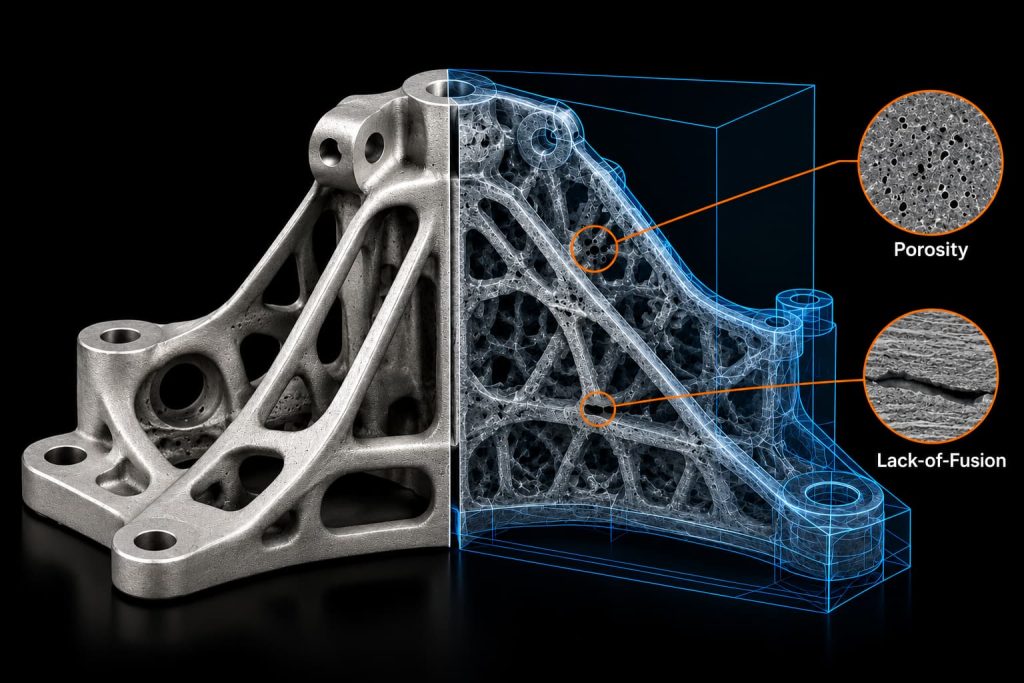
A metal additive manufacturing build may appear flawless externally yet still contain internal defects undetectable by visual or dimensional inspection.
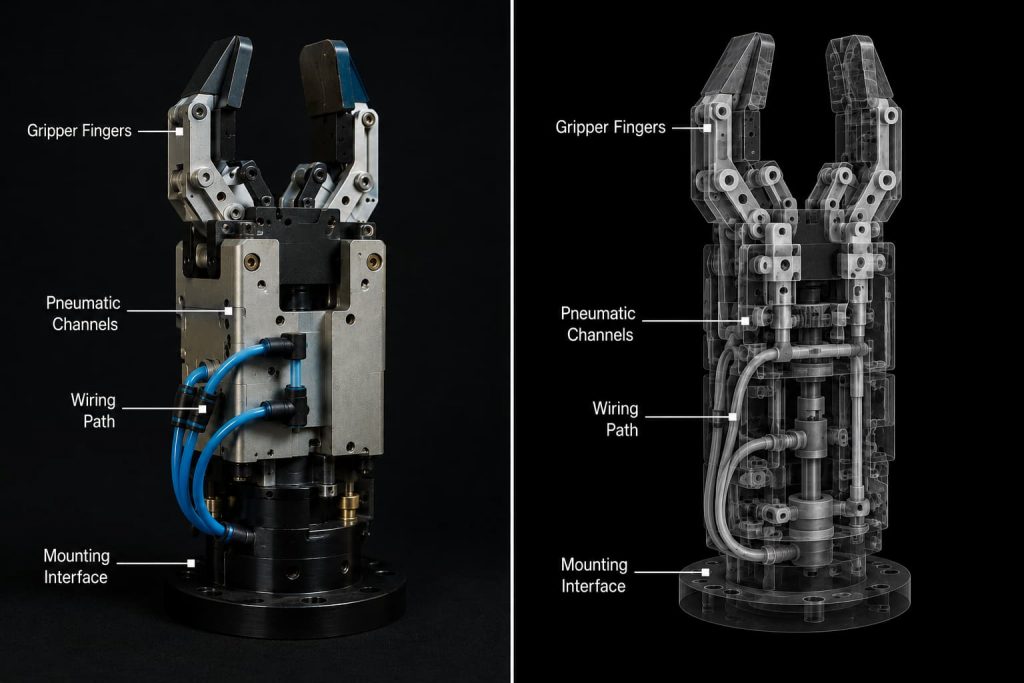
Robotic end-effectors are the point of contact between an industrial robot and the task it performs, and they fail more often at the point of contact than anywhere else in the arm.
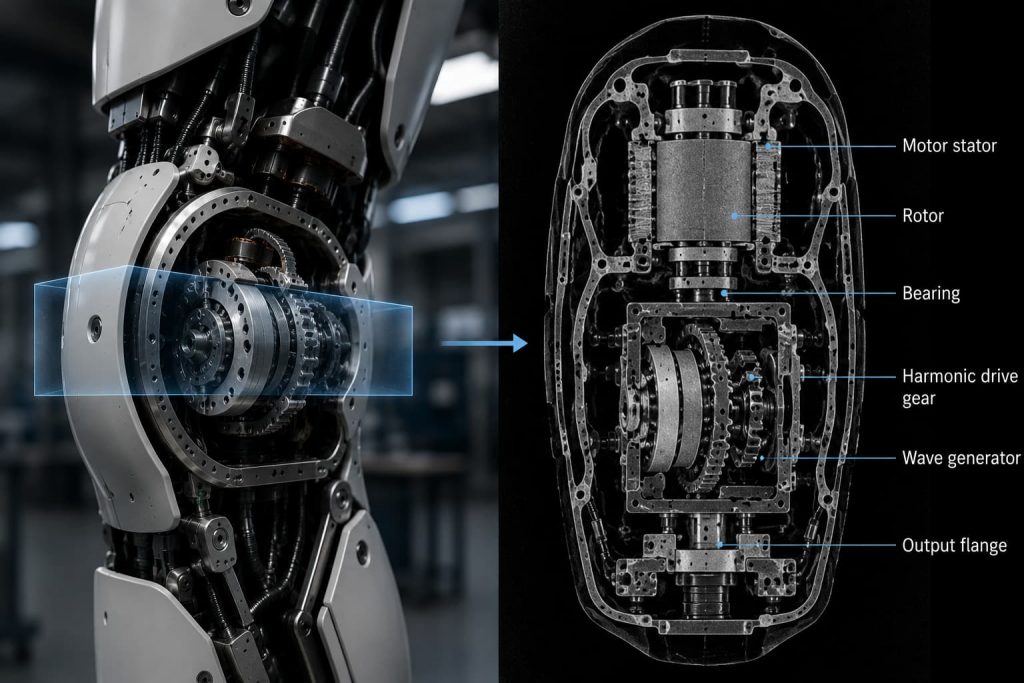
Humanoid robots are no longer confined to research labs. Manufacturers are moving toward production volumes measured in thousands of units per year, and that shift changes what robot manufacturing quality means in practice.
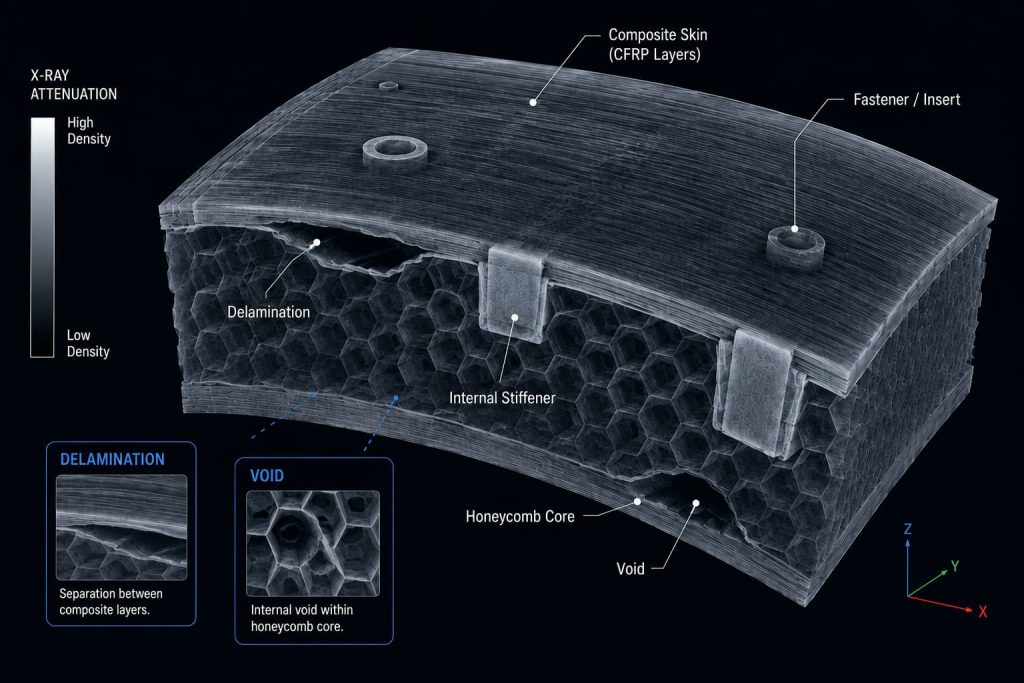
Composite fuselage panels are built from dozens of stacked carbon fiber plies, bonded together under precise heat and pressure to form a structure that is both lightweight and load-bearing.
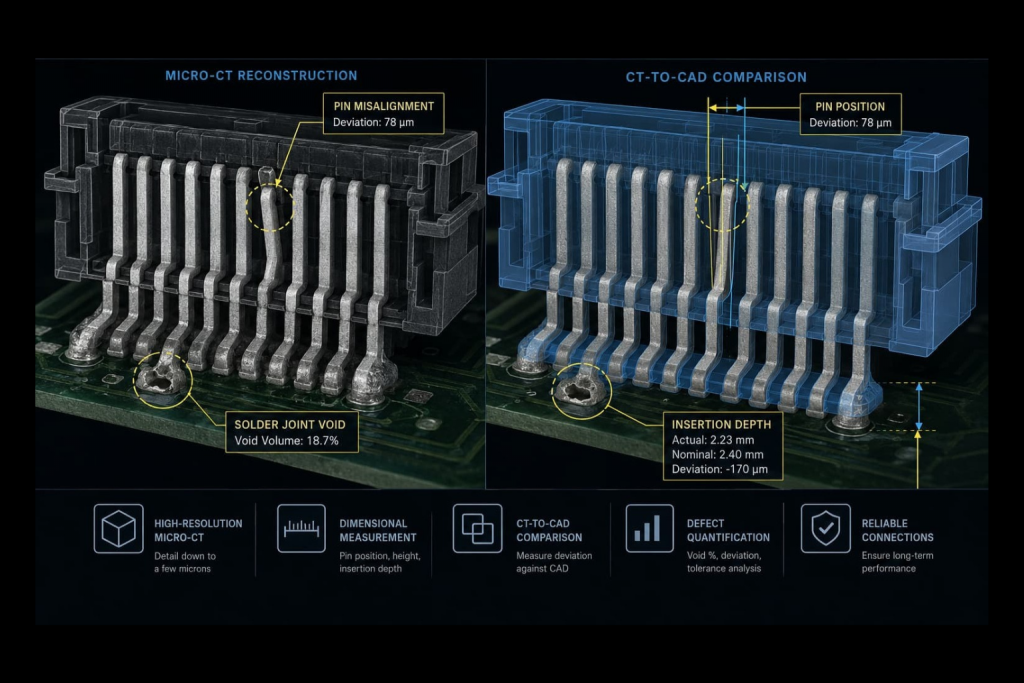
A connector’s job looks simple from the outside: two surfaces meet, and current flows. What determines whether that connection stays reliable over years of thermal cycling and mechanical stress happens
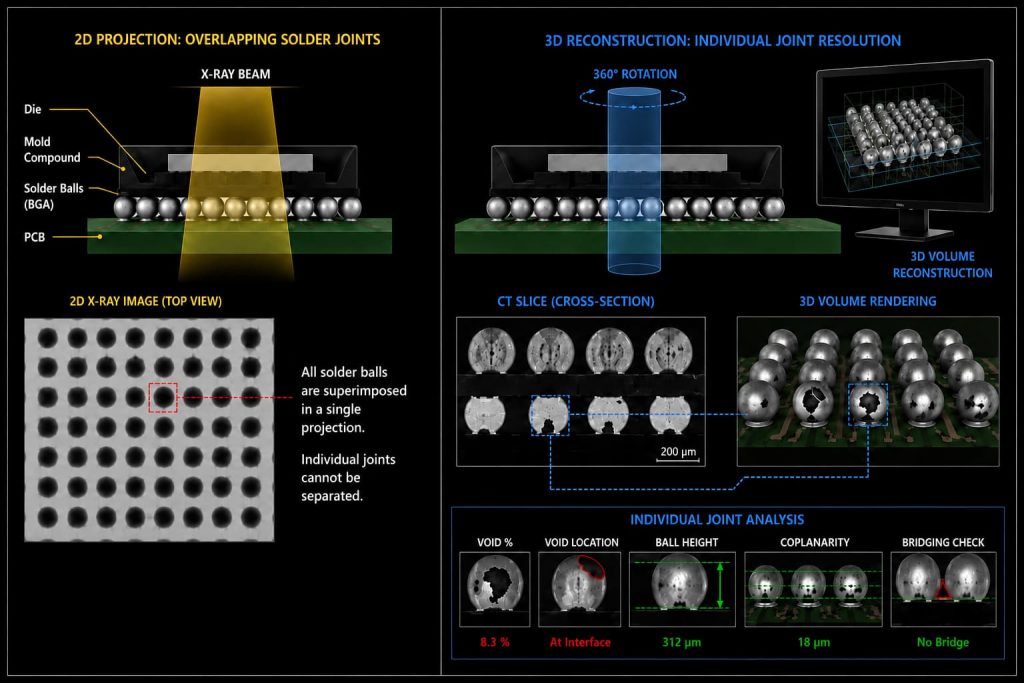
A Ball Grid Array package hides its solder connections underneath the die itself. There is no angle from which a camera, or even a standard 2D X-ray, can view a BGA joint without every other joint in the array overlapping it in the same projection.
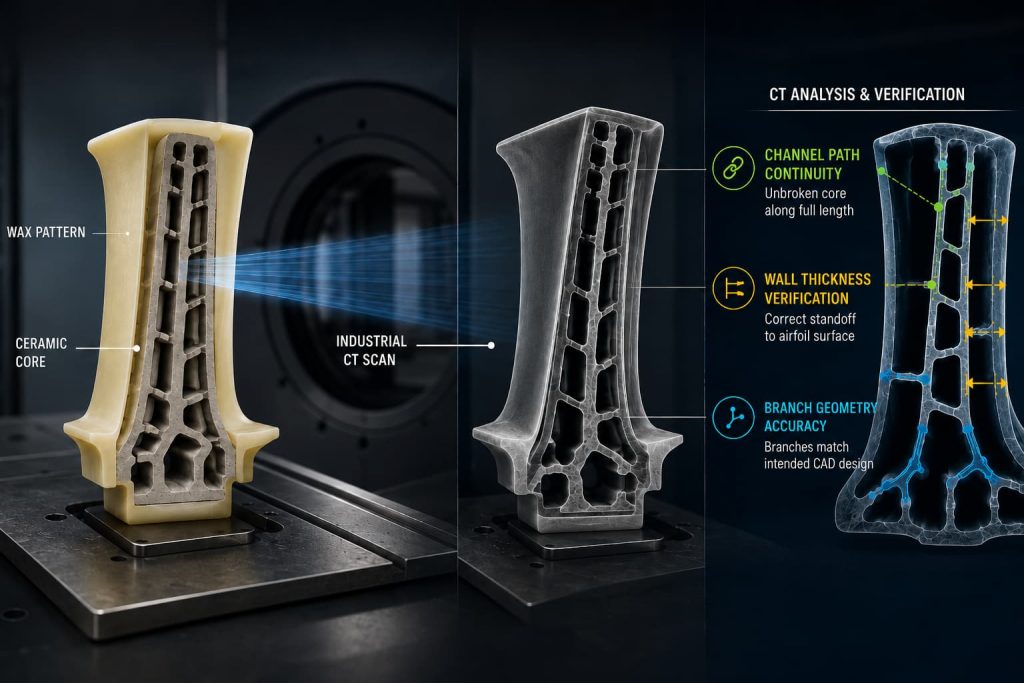
A turbine blade’s internal cooling channels are designed into the wax pattern and ceramic core long before any metal is poured.
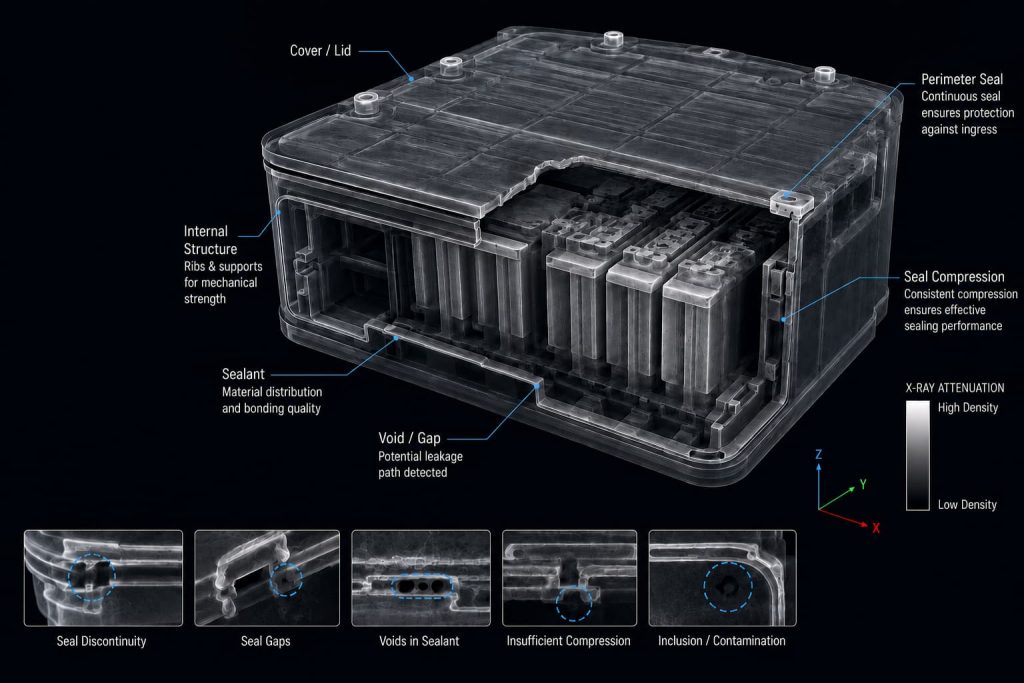
A battery pack enclosure that clears its manufacturing leak test is not guaranteed to remain sealed over its service life.
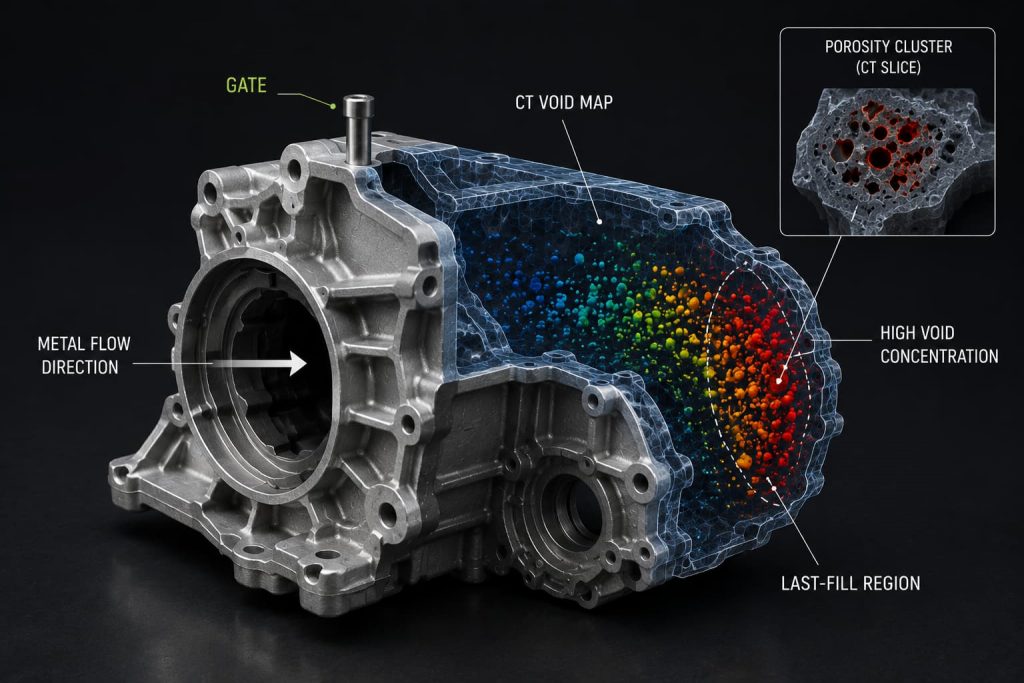
CT void analysis answers a question standard porosity inspection does not: not just how many voids exist in a casting, but where they cluster relative to the gate.
