Aerospace components are becoming lighter, stronger, and increasingly complex. Turbine blades manufactured from high-density nickel-based superalloys require precise inspection of internal cooling channels, wall thickness, and structural integrity before assembly. In a demonstration using PolyCT, three Inconel turbine blades were inspected within a single 30-minute CT scan cycle, increasing inspection throughput by approximately 300% while reducing inspection time and cost per component by approximately 67%.
The operational impact was immediate – A batch that once meant postponing lunch to get through the queue now finishes before lunch even starts.
According to PWC, commercial aircraft backlogs have reached nearly 15,000 aircraft while the industry’s annual revenue exceeded $1 trillion for the first time. As manufacturers work to convert record demand into delivered aircraft, inspection throughput has become as critical as inspection accuracy. Every stage of production, including non-destructive testing, must keep pace with increasing manufacturing volumes.
Industrial CT has always allowed manufacturers to see beyond the surface of a component and detect defects hidden deep within complex internal structures. Today, however, the challenge is no longer whether industrial CT can detect these defects. Modern CT systems already can. The challenge is that standard CT systems inspect one blade at a time, making throughput a limiting factor for production. Recognizing this limitation, XRAY-LAB GmbH & Co. KG, in collaboration with Fraunhofer IIS, developed PolyCT to boost CT performance by enabling the simultaneous inspection of multiple components within a single scan cycle.
For a detailed overview of PolyCT technology and how it integrates with existing industrial CT systems, read our article: “Multiply Your CT Productivity: How PolyCT Lowers 80% Costs in High-Density Components Inspection”
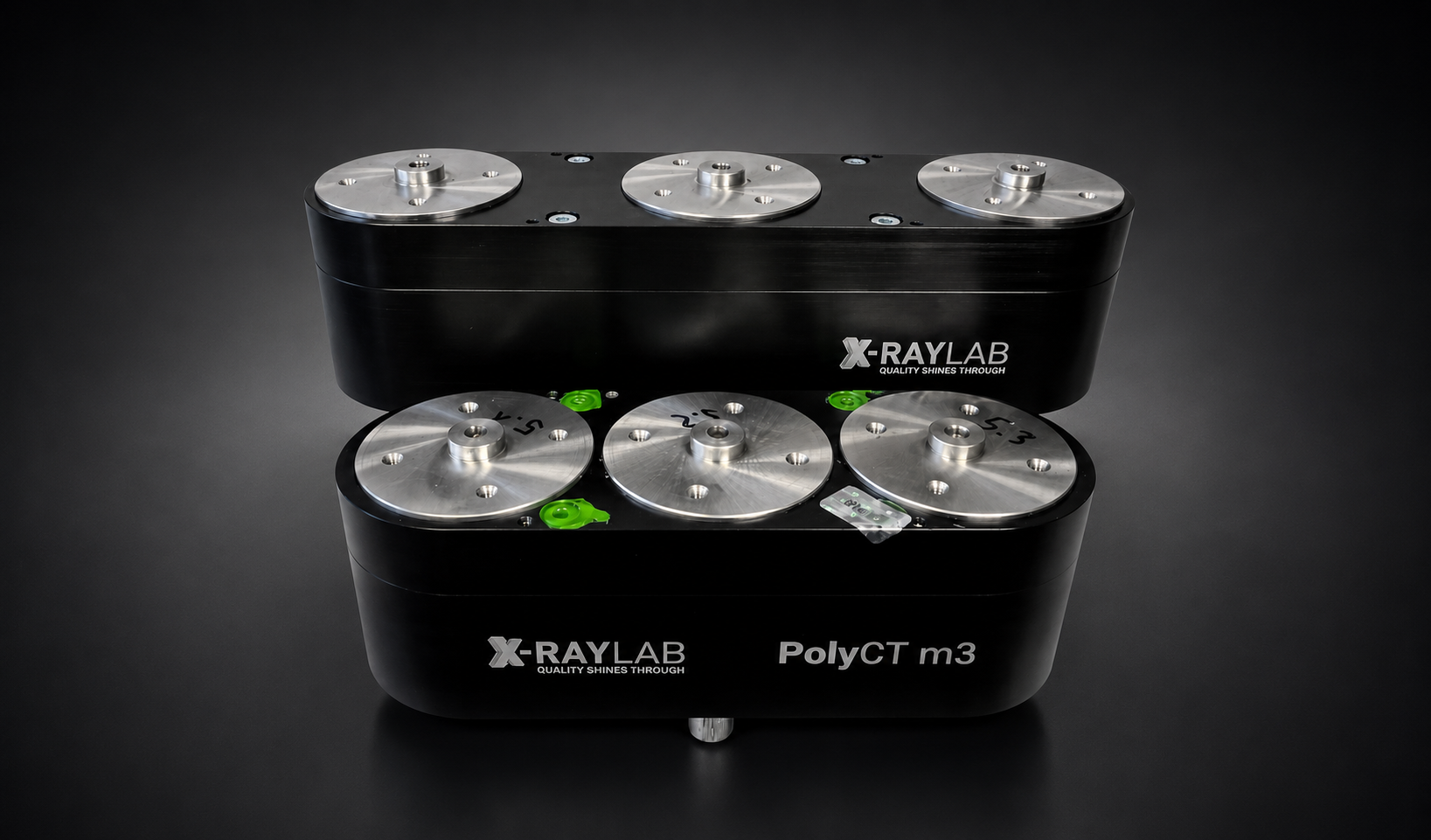
PolyCT L3 (top) and PolyCT m3 (bottom) multi-part fixtures for high-throughput industrial CT inspection.
CT Inspection of Inconel Turbine Blades with PolyCT
In aerospace manufacturing, every turbine blade must be inspected before it reaches the engine. These components are designed to withstand extreme temperatures and mechanical loads, but those same material properties make them difficult to inspect. Internal porosity, cracks, cooling channel deviations, and dimensional inaccuracies cannot be verified through surface inspection and 2D X-ray alone.
Three Inconel turbine blades mounted on the PolyCT M3 inside the Industrial CT scanner
The cost of an undetected internal defect can extend far beyond the component itself, leading to costly rework, production delays, warranty claims, or, in the worst case, in-service failures. This makes reliable CT inspection an essential part of aerospace manufacturing.
To evaluate the application, three Inconel turbine blades were inspected simultaneously using the PolyCT M3. Components that would traditionally require three separate CT acquisitions were inspected within a single scan cycle preserving a separate inspection dataset for every component.
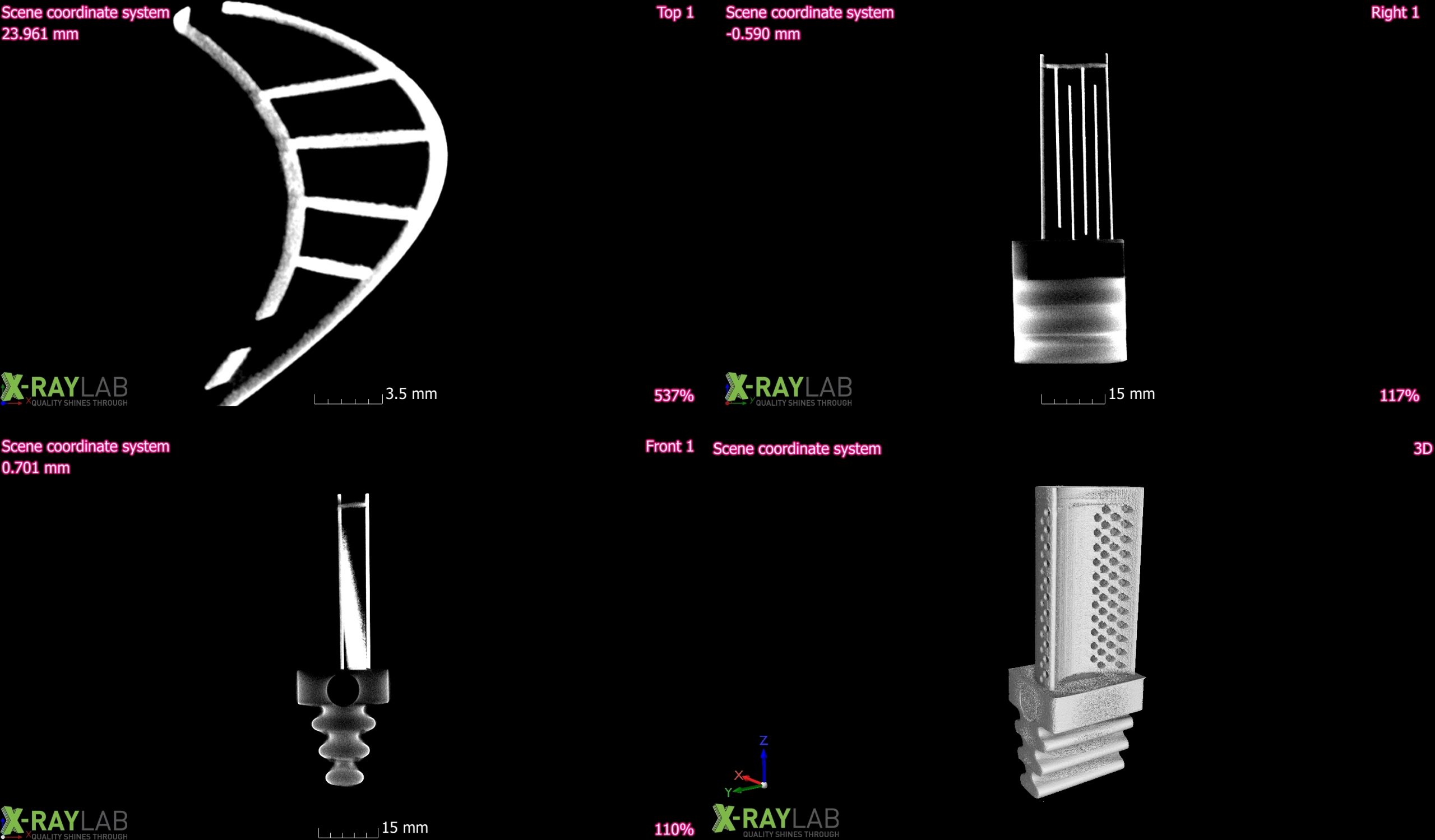
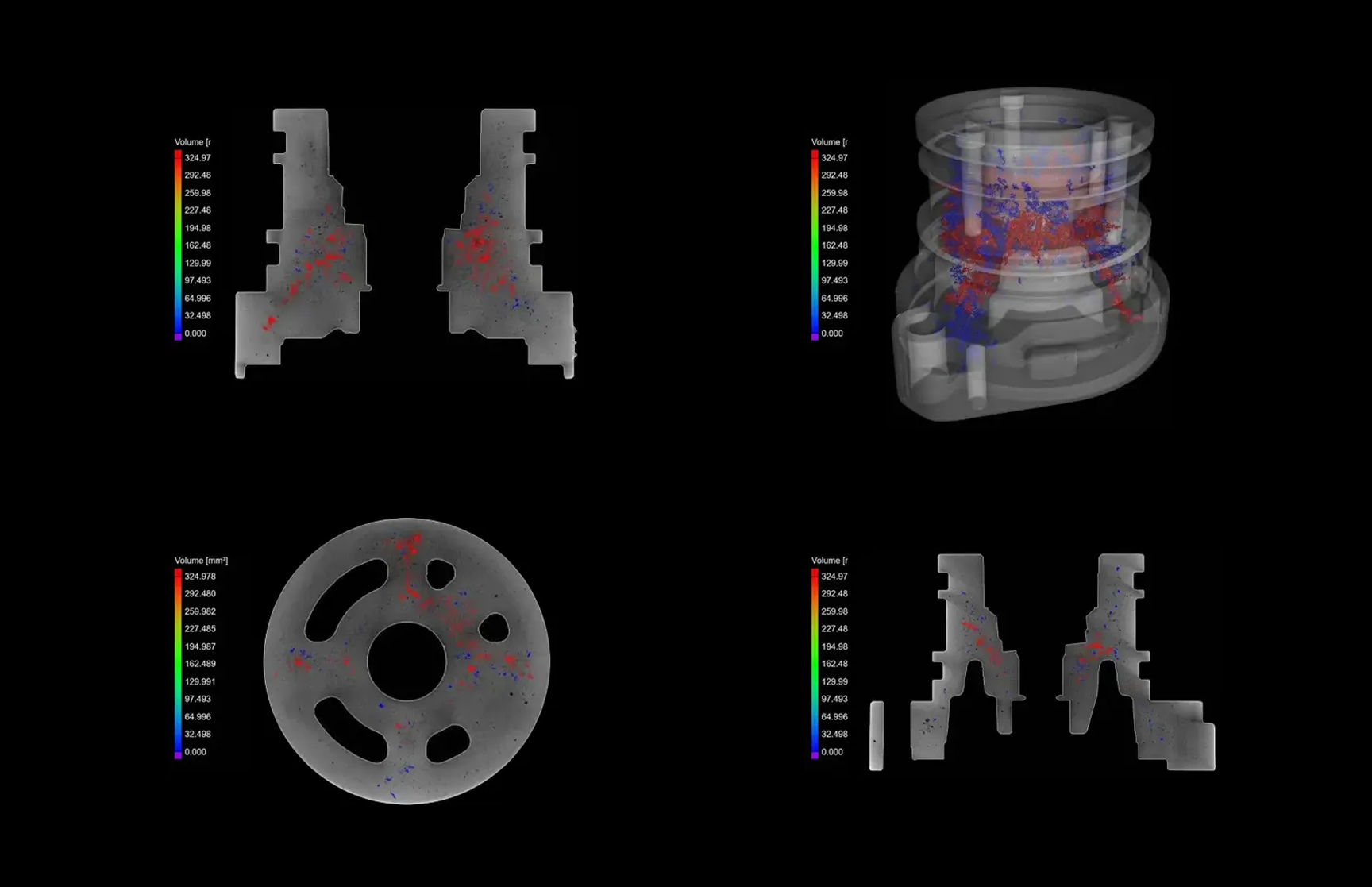
CT scan cross-sections of Inconel turbine blades
Each blade was reconstructed independently through POLYREKO, with its own centre of rotation and its own full 3D dataset. This eliminates superposition artifacts while preserving the image quality and measurement accuracy required for aerospace inspection. All three blades were reconstructed within the same processing time typically required for a conventional single-part workflow.
By inspecting three turbine blades simultaneously, the overall CT inspection time for the batch was reduced to approximately one-third of the conventional workflow. Every batch completed freed an additional hour of CT capacity, increasing the number of components that could be inspected each day. Fewer scan cycles also reduce X-ray tube operating hours, lowering maintenance requirements and extending tube service life while improving the overall efficiency of the inspection process. Instead of increasing inspection capacity by purchasing another CT system, manufacturers can increase throughput using the CT infrastructure they already have.
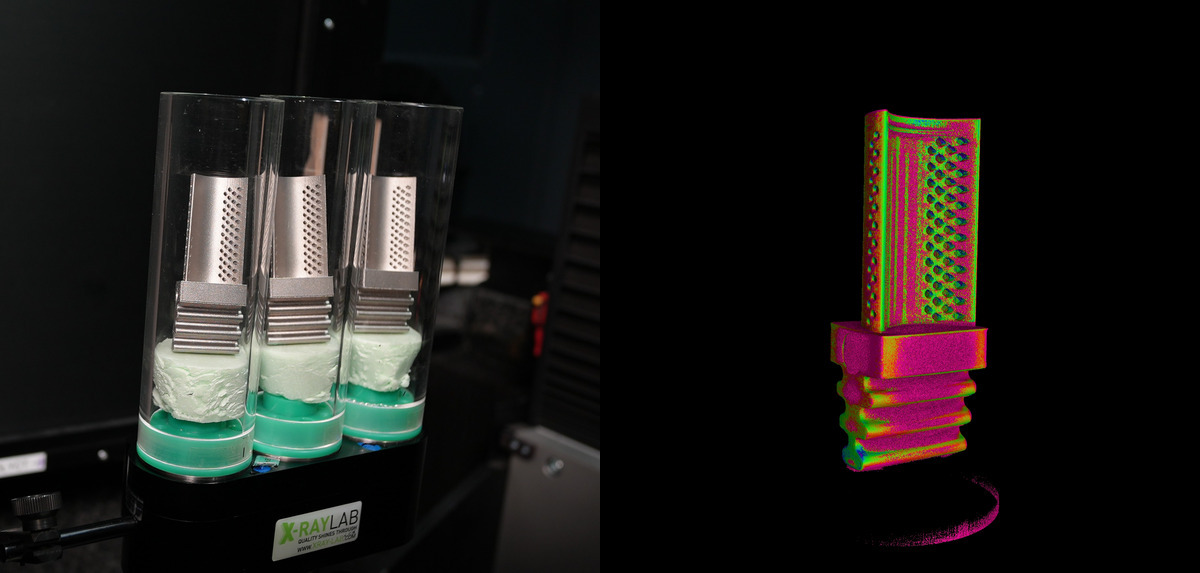
Three Inconel turbine blades were inspected in one CT scan, with the independent CT reconstruction of each blade.
Pre-delivery inspection time for the batch was reduced to one-third of the standard workflow, with inspection cost per component decreasing proportionally. Engineers received independent slice-by-slice 3D volumetric data for each turbine blade, enabling reliable acceptance or rejection decisions before assembly while supporting faster production qualifications.
PolyCT demonstrates that manufacturers no longer need to choose between inspection throughput and inspection quality.
Your CT system is already an investment.
PolyCT helps it deliver a better return.
Discover what your production line could achieve with three or five times more CT inspection capacity. Bring your own turbine blades or aerospace components and see how PolyCT transforms your inspection workflow.
Frequently Asked Questions
How does PolyCT improve aerospace CT inspection?
PolyCT enables multiple aerospace components to be inspected simultaneously within a single CT scan cycle while maintaining an independent centre of rotation and a separate 3D reconstruction for each component.
Does scanning multiple turbine blades affect CT image quality?
Each turbine blade is reconstructed independently using POLYREKO, with its own centre of rotation and individual 3D volumetric dataset. This eliminates superposition artifacts and maintains the image quality and inspection detail required for aerospace quality assurance.
Can PolyCT be integrated with an existing industrial CT scanner?
PolyCT is designed as a non-invasive upgrade kit that integrates directly with existing industrial CT systems. It mounts onto the CT chuck or a centering adapter for flat rotary tables, without modifying the scanner mechanics or software, allowing manufacturers to increase inspection throughput while continuing to use their established CT workflow.