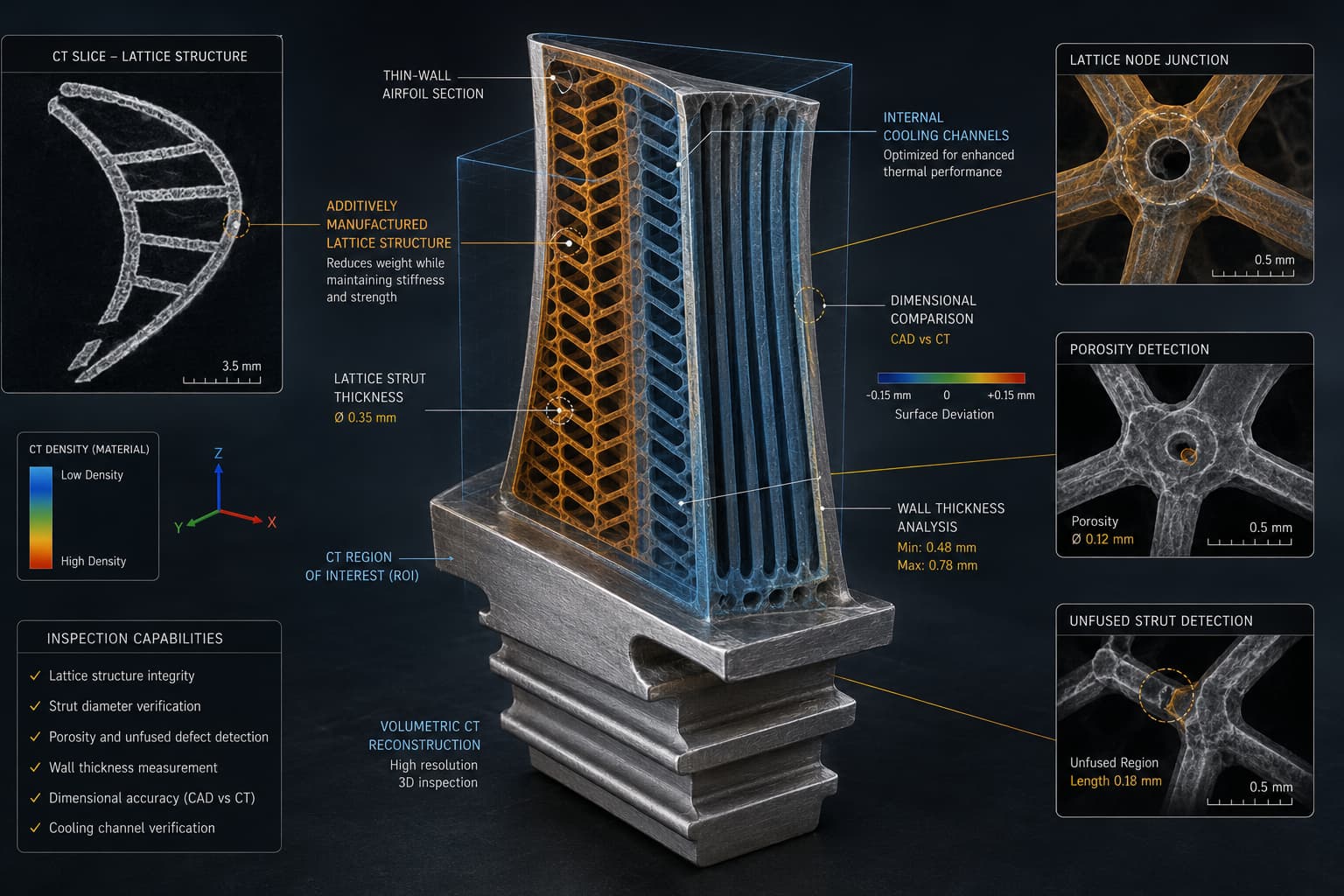
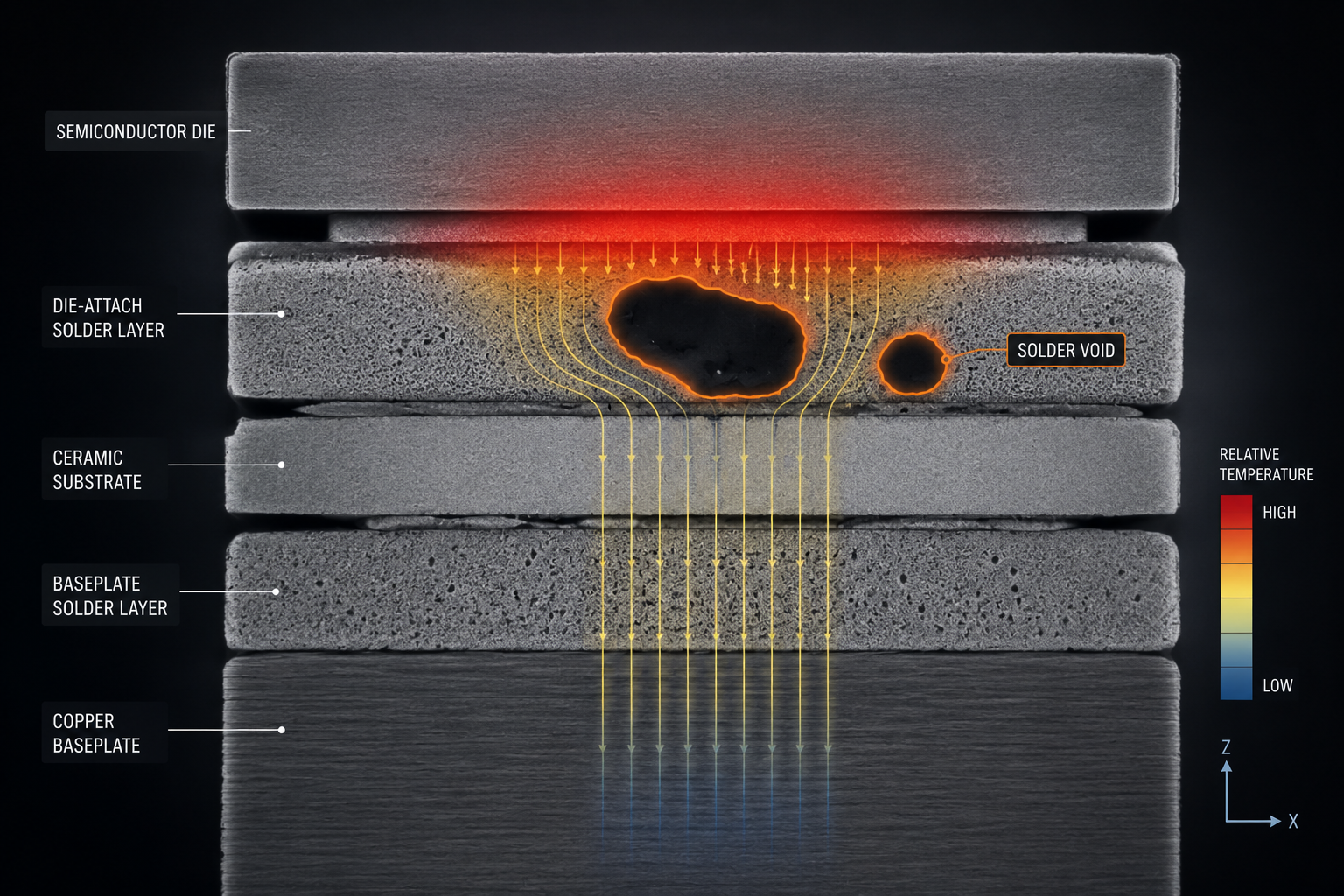
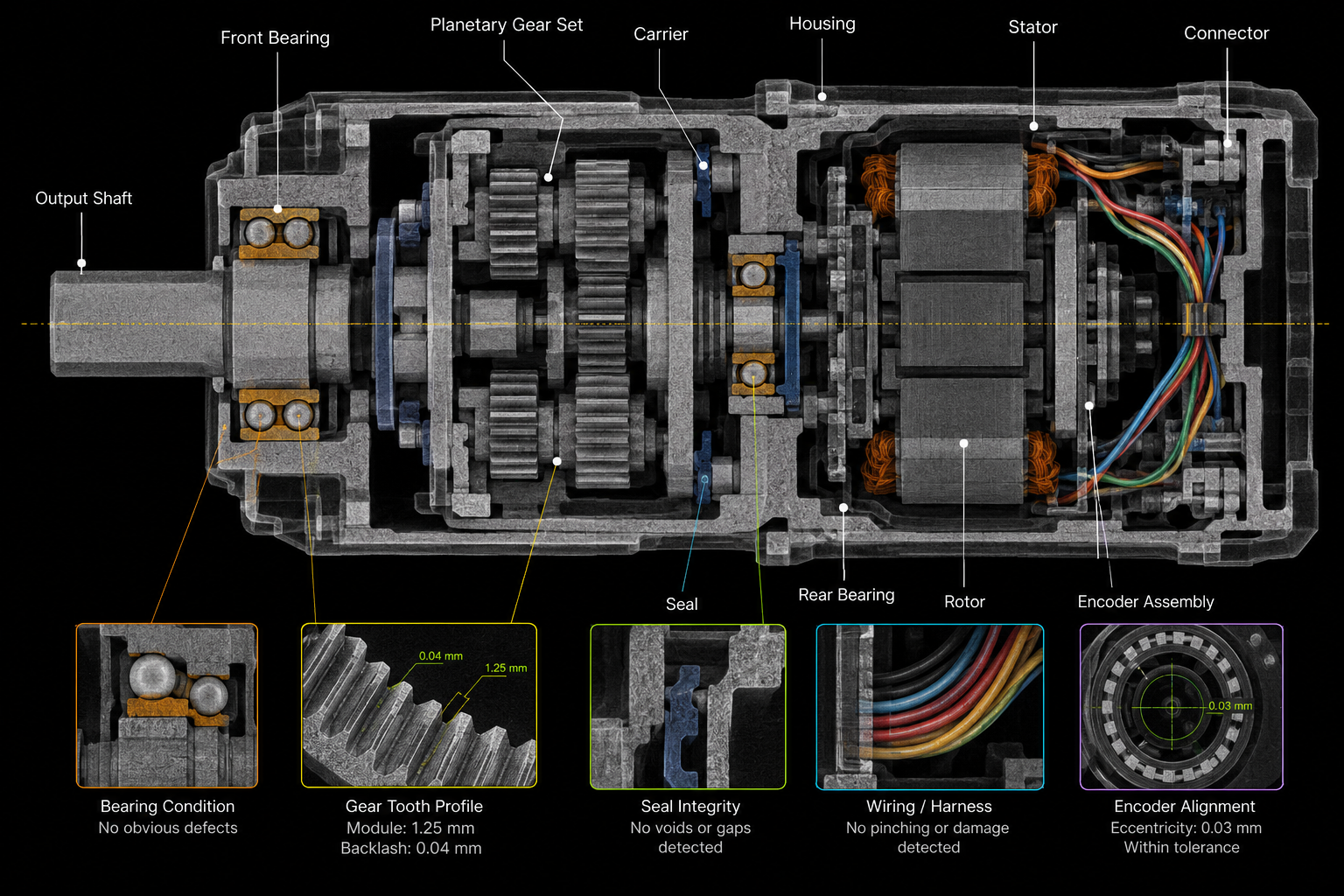
In industrial radiography, two parts with identical design and material can produce markedly different X-ray images, primarily due to subtle differences in material properties rather than flaws or errors.
Even parts from the same source can diverge under the same imaging settings. X-ray inspection measures how radiation interacts with materials, disclosing subtle property differences that are invisible to customary methods.
Therefore, understanding why these differences occur is key to accurate non-destructive testing (NDT). Overlooking material factors may lead to normal manufacturing variation being mistaken for a quality issue, triggering unnecessary investigations or false rejections.
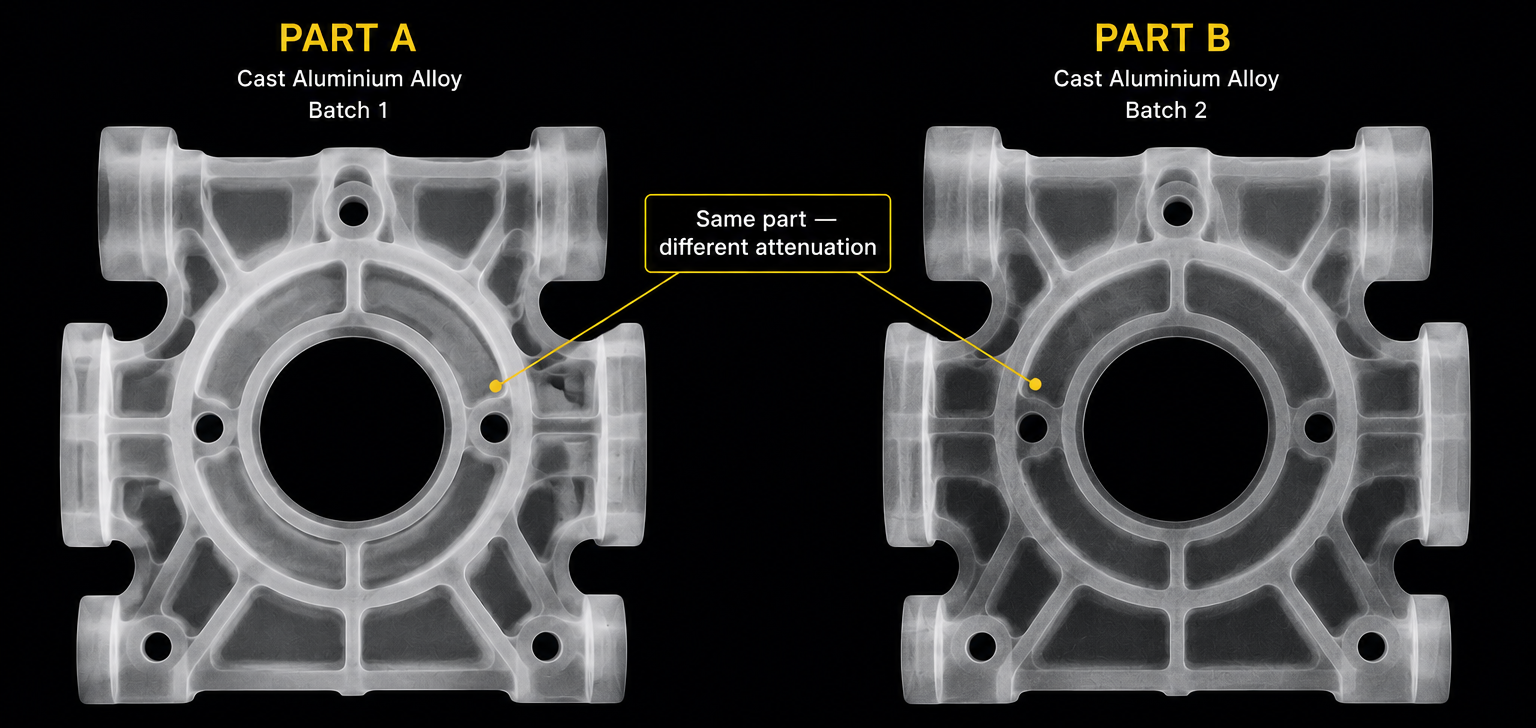
X-ray radiographs of two geometrically identical cast aluminum components inspected under the same imaging conditions, showing differences in greyscale contrast caused by variations in material attenuation rather than defects.
What Causes Differences in X-Ray Images of Identical Parts?
The appearance of an X-ray image is determined by how much radiation is absorbed or scattered before reaching the detector. While component thickness plays an important role, the material characteristics that most strongly influence radiographic contrast are density, atomic number, and microstructure.
Density Variation
Density directly affects X-ray attenuation. Materials with greater mass per unit volume contain more atoms along the beam path, increasing the probability of X-ray interactions and reducing the amount of radiation reaching the detector.
Although density differences are obvious when comparing materials like steel and aluminum, they can also exist within parts made from the same alloy. These variations often arise during production and may be too small to affect dimensional measurements but are still visible in radiographic images.
Casting processes are a common example. As molten metal solidifies, differences in cooling speeds and shrinkage create subtle local density changes throughout a component. Similarly, forging influences material flow and grain distribution, producing localized differences in internal structure. In additive manufacturing, small fluctuations in energy input, scan strategy, or powder consolidation can alter material density at the layer level.
These variations do not necessarily signal defects. However, X-ray systems, which respond sensitively to attenuation changes, can reveal minor density differences as measurable changes in image contrast and greyscale distribution.
Atomic Number and Material Composition
Material composition influences X-ray absorption independently of density. Elements with higher atomic numbers absorb X-rays more effectively than elements with lower atomic numbers, particularly at the inspection energies commonly used in industrial radiography.
As a result, two components with identical geometry can deliver different radiographic images if their chemical compositions differ. This effect becomes especially noticeable when you compare alloy grades. For example, 6061 and 7075 aluminum alloys may appear similar from a manufacturing perspective, but the higher zinc content in 7075 increases X-ray absorption and alters image contrast.
Even within a single alloy specification, compositional differences can occur within permitted manufacturing tolerances. While these variations comply with material standards, they may still influence attenuation and create visible differences in radiographic appearance.
For inspectors and quality engineers, this underscores that understanding the actual material composition matters more than depending solely on nominal alloy designations. Variation in image contrast does not always indicate non-conformance; rather, it frequently reflects normal metallurgical changes during the manufacturing process.
Grain Structure and Radiographic Mottle
A third factor that influences an image’s appearance is material microstructure.
Most engineering metals consist of numerous individual crystals, or grains, whose size and orientation are determined. A third important factor that influences an image’s appearance is material microstructure, building density and composition effects described earlier. Interactions between X-rays and these crystals can create localised variations in image intensity known as radiographic mottle.
Radiographic mottle appears as a patchy or uneven background pattern that is unrelated to defects, density changes, or alloy composition. It is particularly common in large castings, heavy-section forgings, weld zones, and certain aerospace components.
Although mottle is a normal material characteristic, it can complicate inspection by reducing image uniformity and making small defects harder to detect. A porosity indication that is easily visible in fine-grained material may become harder to detect when surrounded by considerable background mottling.
The severity of this effect depends on both the material and the chosen inspection parameters. By adjusting imaging energy and optimizing exposure settings, inspectors can often reduce grain-related artefacts and improve defect detectability.
Why Material Properties Matter in Industrial Radiography and NDT Inspection
Understanding how material properties affect image formation is essential for reliable radiographic interpretation.
A common mistake in industrial inspection is assuming every contrast variation is a defect. In reality, darker or lighter regions may reflect normal differences in density, composition, or microstructure. Without context, these variations can be misinterpreted, leading to unnecessary rework, extra inspection, or rejection of acceptable components.
Reference standards help avoid these errors. Comparing production parts to known-conforming components from the same process provides a baseline for distinguishing true discontinuities from expected material variation. This is especially valuable when inspecting castings, forgings, and additively manufactured parts, where microstructural variability is inherent.
Inspection parameters are also important. X-ray energy selection affects sensitivity to density differences, composition, and grain-related artefacts. Lower energies provide greater material contrast, while higher energies can reduce atomic-number effects and mottle. Selecting imaging conditions requires balancing contrast sensitivity and image quality.
Manufacturing history should also be considered. Components from different batches can show measurable radiographic differences while still meeting design and material requirements. Understanding the production process, certification data, and expected variability helps inspectors interpret images accurately and make informed decisions.
How XRAY-LAB Accounts for Material Variation
Accurate X-ray inspection requires more than high-resolution imaging equipment. It also requires a detailed understanding of how materials influence image formation.
At XRAY-LAB, inspection parameters and accurate X-ray inspection depend not only on high-resolution imaging equipment but also on a detailed understanding of how materials influence image formation. If required, reference scans of known-conforming components are established before production evaluation begins, delivering a reliable baseline for image comparison.
This approach matters most when inspectors assess cast components, mixed-alloy assemblies, and additively manufactured parts, where density and microstructural-related variation often indicate expected characteristics rather than defects. By accounting for material-related factors, inspectors can interpret inspection results more accurately and consistently.
Frequently Asked Questions
Does a darker area in an X-ray image always indicate a defect?
No. Darker or lighter regions may result from normal variations in material density, alloy composition, or microstructure. Correct interpretation requires comparison with reference standards and knowledge of the manufacturing process.
What is radiographic mottle?
Radiographic mottle is a patchy background pattern caused by interactions between X-rays and a material’s grain structure. It is not a defect but can make defect detection more challenging.
How can inspectors distinguish material variation from defects?
The most effective approach is to compare inspection results against known-conforming reference parts while considering material composition, manufacturing history, and expected process variation.