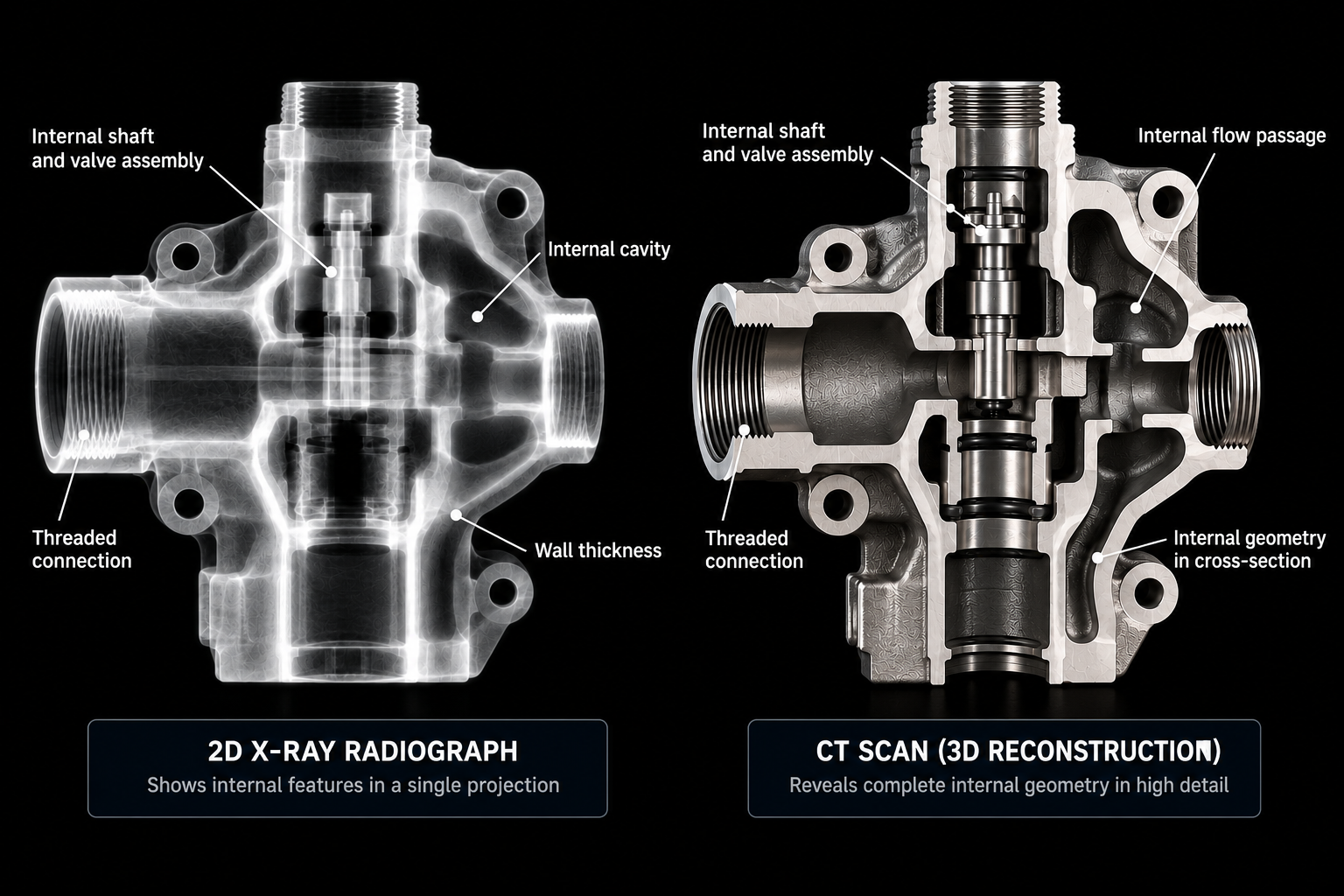
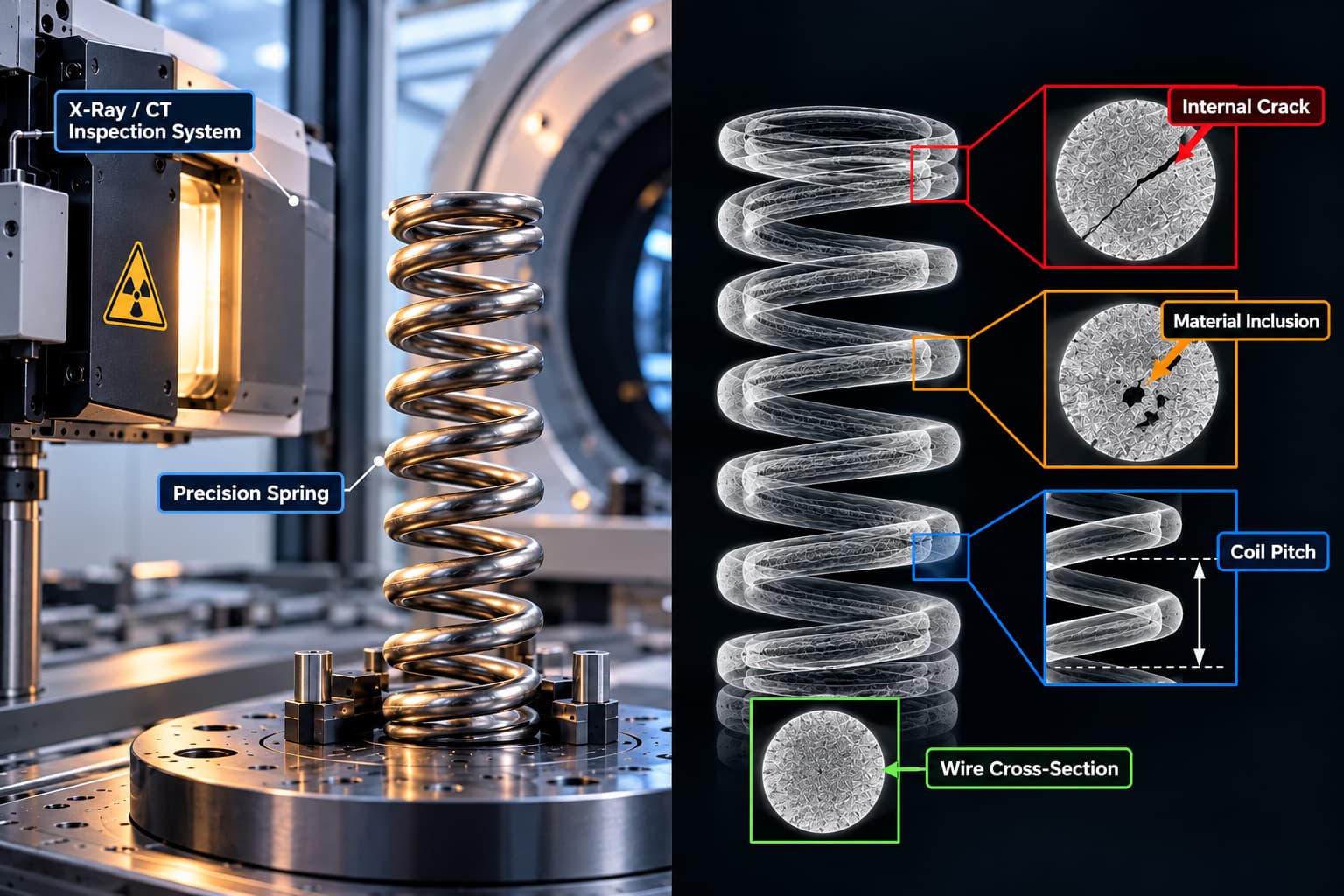
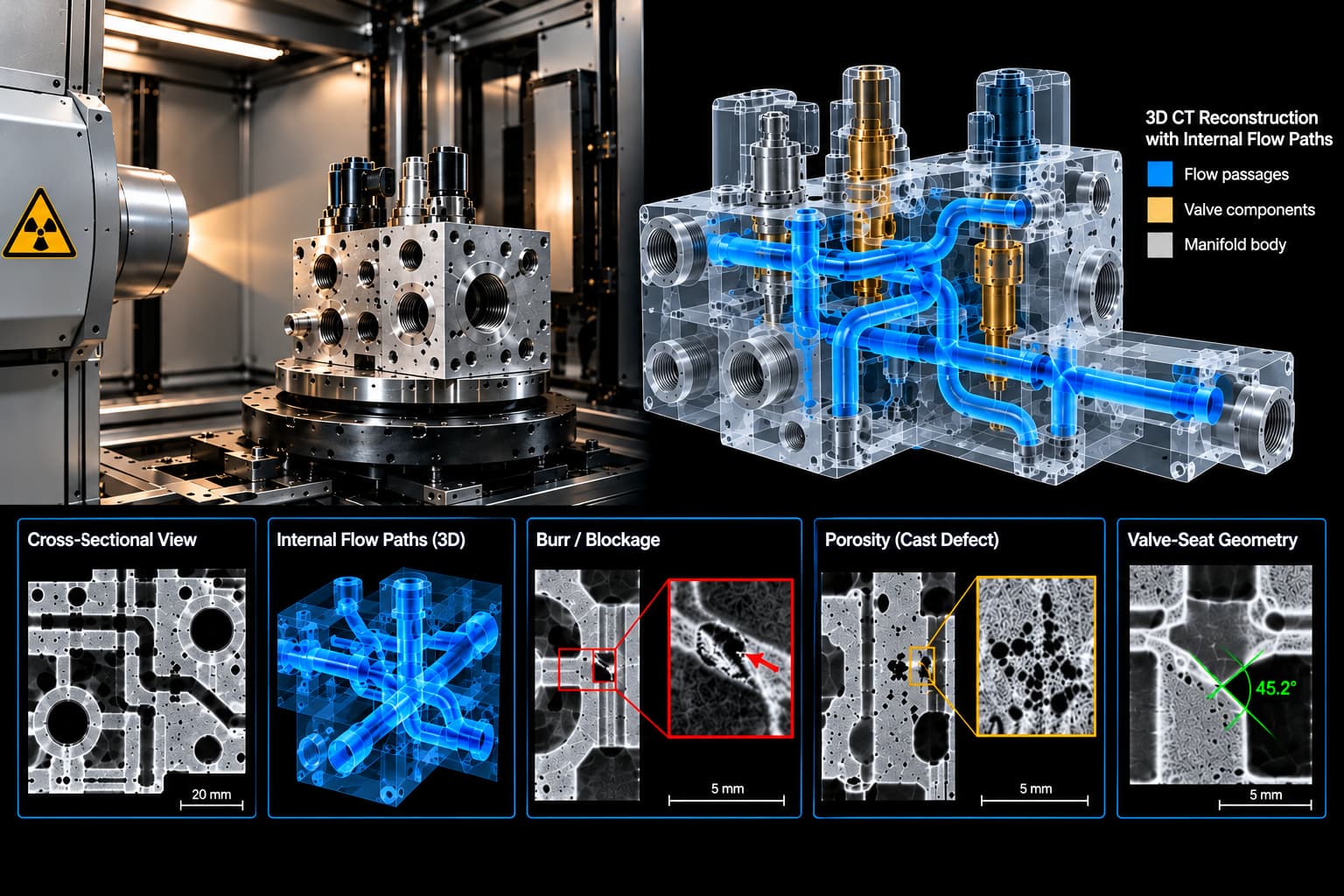
CT scan resolution is the smallest feature a CT system can distinguish within a reconstructed volume, and it is defined most directly by voxel size, the dimension of a single three-dimensional pixel in the scan data. A smaller voxel size generally allows finer detail to be resolved, but voxel size is not a setting chosen independently; it is a result of system geometry, detector characteristics, and part size interacting together. Understanding how these factors combine is what separates a CT scan capable of finding the defect a program actually needs to find from one that only appears detailed.
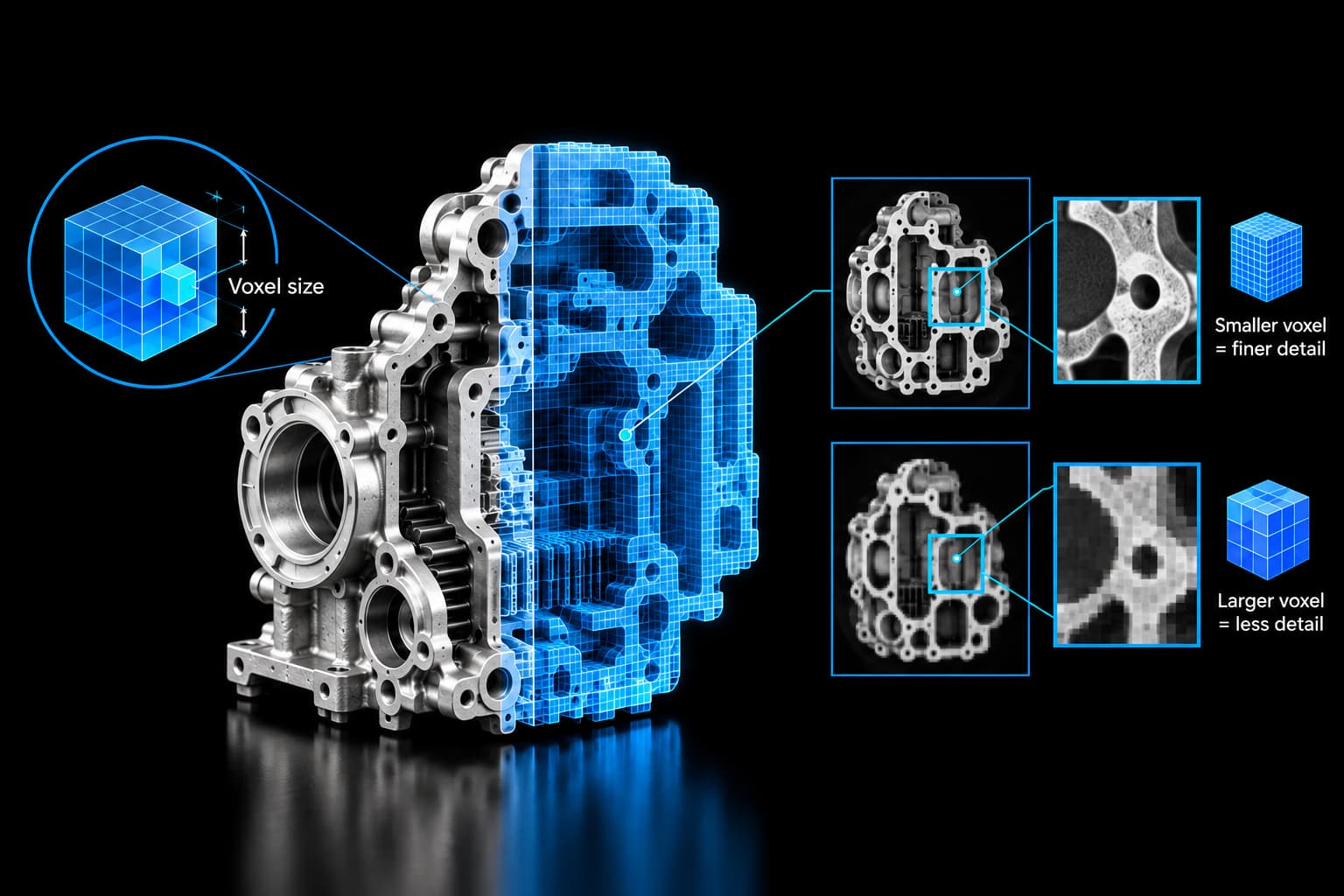
Comparison of CT scan detail at smaller versus larger voxel size on a gearbox housing, showing how voxel size affects resolution.
What CT Scan Resolution Actually Means
Industrial CT resolution is often discussed as a single number, but it actually describes two related but distinct properties: spatial resolution, the smallest distinguishable feature size, and contrast resolution, the ability to distinguish subtle density differences between adjacent materials. Voxel size CT sets an upper bound on spatial resolution, since a feature smaller than a single voxel cannot be clearly resolved regardless of how sharp the reconstruction otherwise is. CT image quality factors combine these two properties with noise level and artifact presence to determine what a scan is genuinely capable of showing.
How Voxel Size Is Determined by Geometry and Detector
Voxel size results directly from geometric magnification in industrial CT, the ratio between the source-to-detector distance and the source-to-object distance. Moving a part closer to the X-ray source increases magnification and reduces effective voxel size, but only up to the point where focal spot size becomes the limiting factor. This is why microfocus X-ray technology, which minimizes focal spot size specifically to reduce geometric distortion, plays such a direct role in achieving fine voxel sizes; a larger focal spot blurs fine detail no matter how much magnification is applied.
Detector Types and Their Effect on CT Image Quality
Detector pixel pitch and CT resolution are closely linked, since detector pixel size sets a physical floor on achievable resolution independent of magnification. Flat panel detectors, commonly used in cone-beam CT systems, trade some resolution for large field of view and fast acquisition, while line detectors used in fan-beam systems generally achieve finer resolution at the cost of longer scan times, a distinction that echoes the broader difference between industrial X-ray and CT scanning approaches more generally. Detector type is therefore selected as much for the inspection task’s acceptable trade-off between resolution and throughput as for raw pixel count alone.
How Voxel Size Affects Defect Detection
How voxel size affects defect detection in CT follows a practical rule of thumb: a defect generally needs to span several voxels before it can be reliably identified and sized, not merely detected as a single anomalous point. This means acceptance criteria specifying a minimum defect size directly dictate the maximum acceptable voxel size for a given inspection, a relationship made concrete in applications such as wall thickness analysis with industrial CT, where measurement accuracy is bounded by the same voxel-to-feature-size relationship that governs defect detection.
Choosing CT Resolution for a Specific Inspection Task
Choosing CT system resolution for specific defects requires balancing spatial vs contrast resolution in CT against part size and scan time, since finer resolution generally means a smaller field of view, longer scan time, or both. A small, feature-dense component inspected at extremely fine resolution, such as the internal structures examined in high-resolution micro-CT for PCB connectors, demonstrates one end of this trade-off, where resolution requirements are set by feature size measured in microns rather than millimeters. Larger components generally accept coarser resolution in exchange for scanning the part in a single field of view rather than stitching multiple scans together.
XRAY-LAB selects CT resolution based on the specific defect type and minimum defect size a program needs to detect, rather than defaulting to the finest resolution a system can technically achieve. This approach balances image quality against practical scan time and throughput requirements, giving customers a scan configuration matched to their actual inspection objective rather than one that simply maximizes a specification sheet number.
Frequently Asked Questions
What is voxel size and why does it matter for industrial CT?
Voxel size is the dimension of a single three-dimensional pixel in a CT dataset, and it sets an upper bound on spatial resolution, since features smaller than a voxel cannot be clearly resolved in the reconstruction.
How do detector type and pixel pitch influence CT resolution?
Detector pixel pitch sets a physical floor on achievable resolution independent of magnification, and detector type, flat panel or line detector, further affects the trade-off between resolution and scan throughput.
What is the relationship between field of view, magnification, and voxel size?
Increasing magnification by moving a part closer to the source reduces voxel size but also reduces field of view, meaning a full part scan and a fine-resolution scan often require different setups.
How small must a defect be relative to voxel size to be reliably detected?
A defect generally needs to span several voxels to be reliably identified and sized rather than simply flagged as an anomalous point, so voxel size should be set well below the minimum defect size of interest.
How do you balance resolution, scan time, and part size in CT?
Resolution, scan time, and part size are balanced by matching voxel size to the minimum defect size a program requires, then accepting the corresponding trade-off in field of view or total scan time.