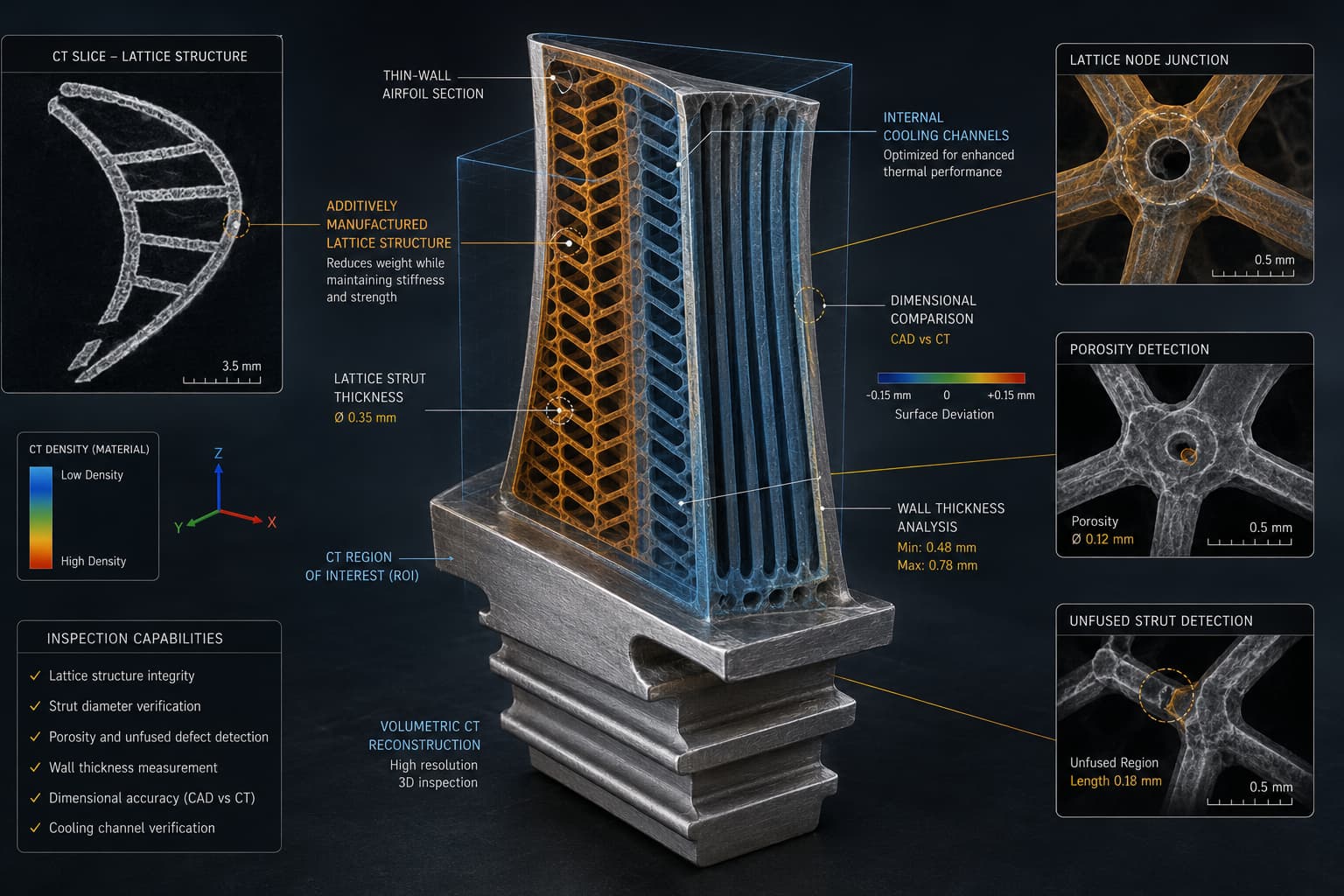
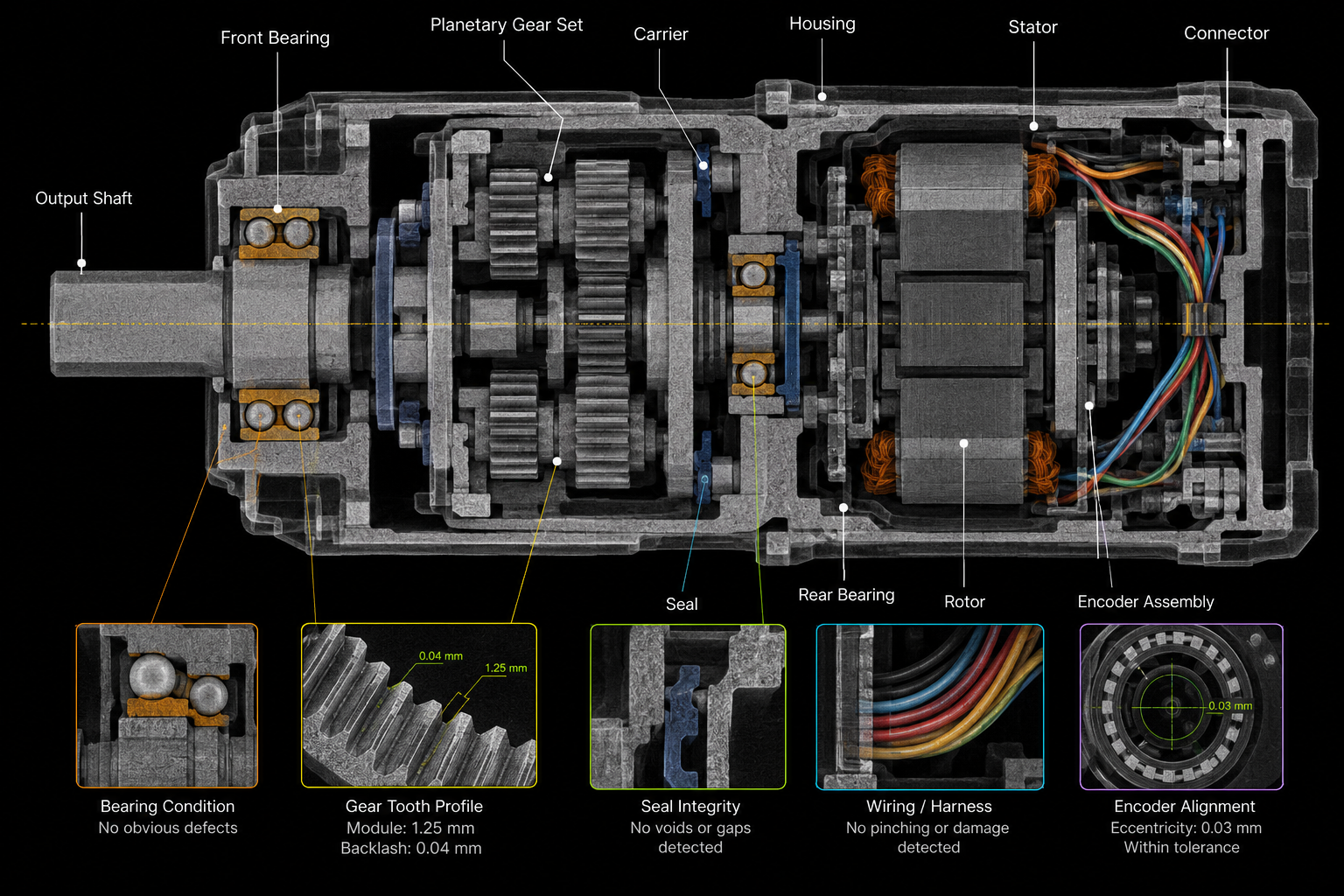
Metal additive manufacturing has evolved far beyond prototyping. Aerospace brackets, orthopedic implants, turbine components, and structural automotive parts are now being produced directly using powder bed fusion technologies and deployed in actual applications.
This change has fundamentally changed how manufacturers approach quality assurance.
Unlike conventionally machined parts, metal additive manufacturing introduces variables that directly influence internal structure. Build quality depends on thermal behavior, scan strategy, powder consistency, build orientation, and energy density during fusion. As a result, no two builds behave identically.
More importantly, many defects generated during the printing process remain completely invisible from outside. Porosity clusters, lack of fusion zones, trapped powder, internal channel distortion, and layer separation often exist inside a fully functional-looking component.
For manufacturers producing critical components, external inspection alone is no longer enough. X-ray inspection of 3D-printed metal parts, particularly via industrial CT scanning, has become the most reliable non-destructive method for validating internal integrity prior to deployment.
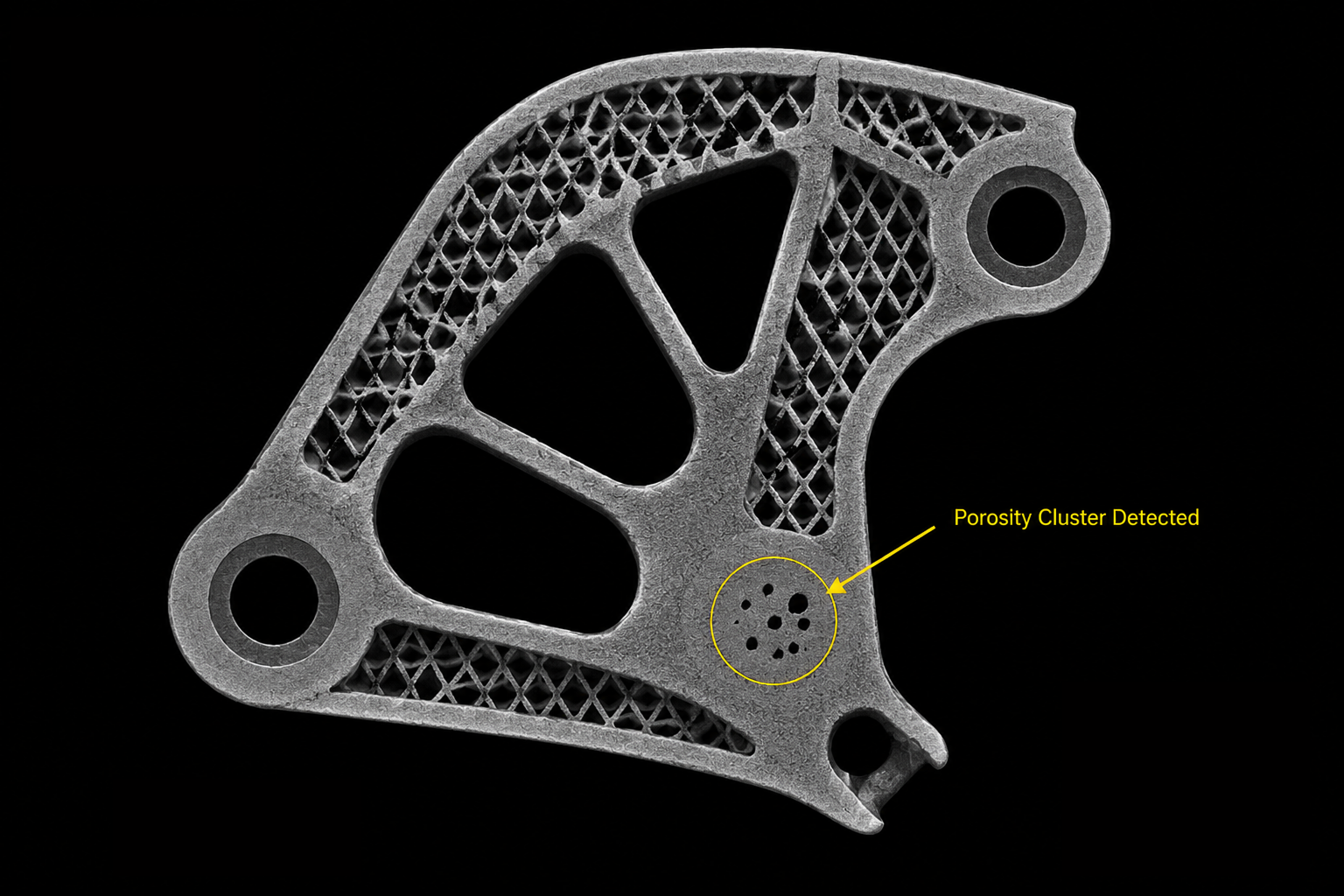
CT cross-sectional analysis of a 3D printed titanium component highlighting internal lattice structure and localized porosity defects.
Common Internal Defects Detected During X-Ray Inspection of 3D Printed Metal Parts
Metal additive manufacturing introduces defect mechanisms that are fundamentally different from conventional manufacturing. Knowing these defects explains why internal inspection has become essential.
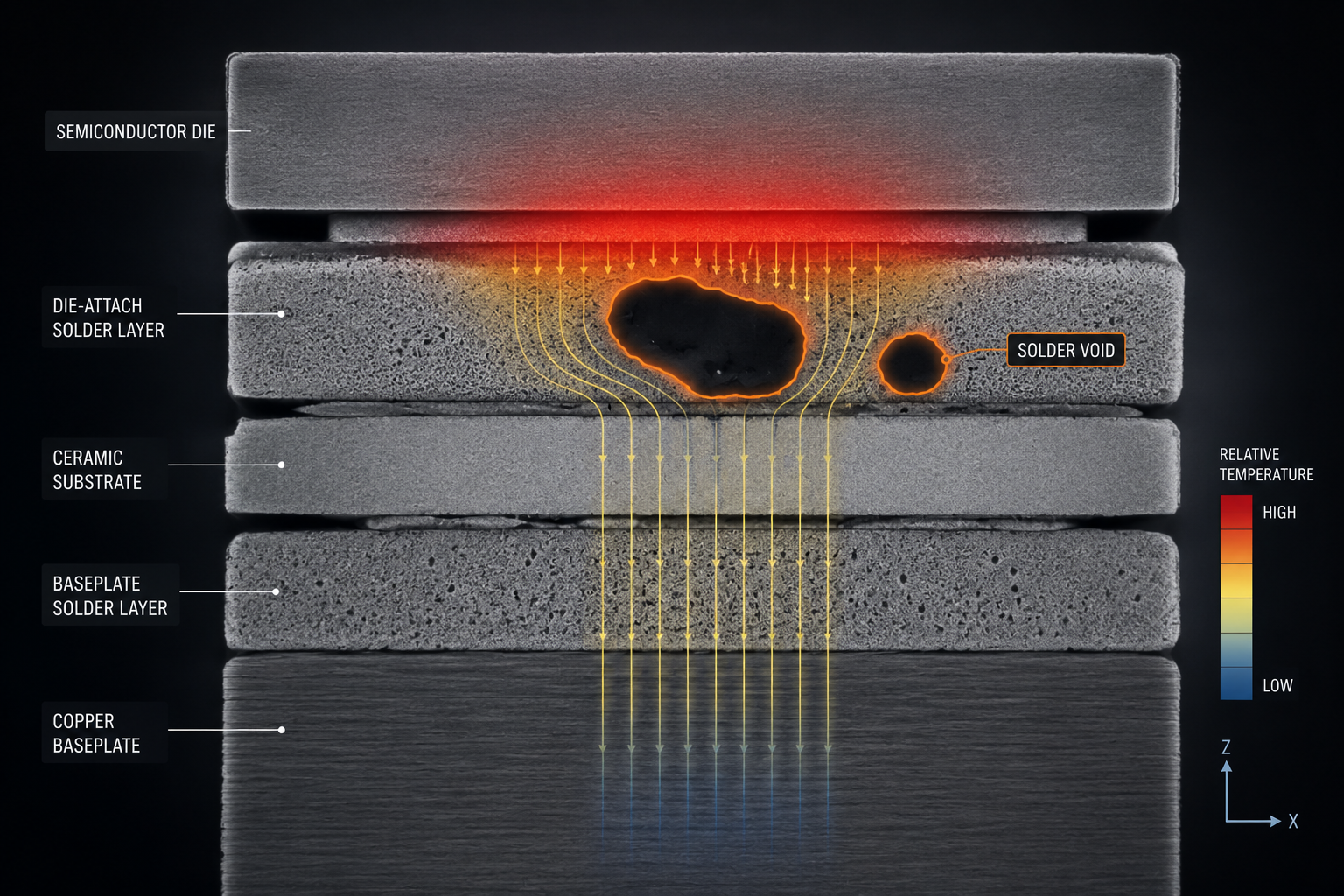
Porosity Formation: Gas entrapment during solidification can create spherical pores within the internal structure. Excessive laser energy may also create keyhole pores caused by vapor cavity collapse. Although small pores may appear insignificant, they frequently serve as crack origin sites through cyclic loading, particularly in fatigue-sensitive aerospace components.
Lack of Fusion Defects: Lack of fusion occurs when adjacent layers fail to fully melt during printing. This creates irregular internal voids between layers that significantly weaken structural performance. Research regularly identifies a lack of fusion as one of the most critical causes of premature failure in powder bed fusion components.
Trapped Residual Powder: Processes such as DMLS (Direct Metal Laser Sintering) and SLS (Selective Laser Sintering) require removing unfused powder from internal channels after printing. In complex internal geometries, residual powder may remain trapped in closed cavities, internal cooling channels, or mesh frameworks, creating long-term performance dangers during operation.
Internal Delamination: Thermal stress build-up during printing can cause internal separation between build layers. These defects create planar internal cracks that remain nearly impossible to detect using conventional radiography or surface inspection methods.
Material Inclusions: Powder contamination during production may introduce unwanted particles of different alloy compositions. These inclusions compromise material integrity and create interior density anomalies that only volumetric CT inspection can reliably detect.
Why CT Scanning Is the Most Reliable NDT Method for Additively Manufactured Components
The challenge in additive manufacturing is not simply finding defects. It is the ability to detect defects in highly complex internal geometries that additive manufacturing enables.
Many metal AM components now include:
- Internal cooling channels
- Grid frameworks
- Hollow structural cavities
- Conformal cooling paths
- Lightweight biomorphic geometries
These internal structures are inaccessible once production is complete. Conventional inspection methods have difficulty evaluating them effectively.
Traditional NDT limitations comprise:
- Ultrasonic testing requires physical access and struggles with rough AM surfaces.
- Dye penetrant testing detects only surface defects.
- Dimensional metrology validates external geometry only.
- Destructive cross-sectioning sacrifices the part entirely
Industrial CT scanning overcomes these drawbacks by generating a complete volumetric dataset of the entire component.
This allows manufacturers to simultaneously:
- Detect internal porosity distribution.
- Identify the lack of fusion zones.
- Verify internal channel geometry.
- Confirm trapped powder removal.
- Validate wall thickness consistency.
- Compare internal geometry directly against the CAD design.
For manufacturers implementing additive manufacturing quality control, CT scanning remains the only method that can provide this level of internal visibility without damaging the component.
CT Scanning for Lattice Structure Verification in Metal Additive Manufacturing
One inspection challenge unique to additive manufacturing is lattice structure validation.
Lattice designs allow manufacturers to reduce weight while sustaining structural performance. These internal frameworks are widely used in aerospace components, orthopedic implants, and advanced structural engineering applications.
However, grid frameworks are exceptionally difficult to inspect.
A titanium aerospace bracket may contain thousands of lattice nodes, each fabricated with precise wall thickness, connectivity, and structural geometry. Even minor defects such as collapsed struts, incomplete node formation, or under-sintered regions can compromise fatigue strength.
Consider a flight-critical aerospace bracket produced through laser powder bed fusion. Externally, the part may pass dimensional inspection with no issues. However, CT scanning frequently reveals internal porosity clusters or incomplete lattice node formation that can notably reduce fatigue life under cyclic loading conditions.
Industrial CT enables complete node-by-node verification of lattice integrity, providing engineers with inspection data that no conventional inspection method can generate.
Manufacturers working with aerospace-grade AM components can also explore How X-Ray Inspection Ensures Quality Control in Aerospace Components for additional insight into internal structural validation.
How X-Ray Inspection Detects Porosity and Internal Defects in Metal AM Parts
Unlike conventional inspection methods, CT scanning does not simply produce a pass-or-fail result.
The scan generates analytical data that supports engineering validation and process enhancement.
Inspection outputs typically include:
- Pore size distribution mapping
- Total void volume analysis
- Lack of fusion defect characterization
- Internal wall thickness analysis
- Internal channel dimensional verification
- Powder clearance confirmation
- CAD comparison against as-built geometry
For manufacturers evaluating powder bed fusion reliability, understanding Porosity Analysis Using CT Scanning is equally important for identifying void formation and density irregularities in metal-printed components.
This level of internal defect analysis is critical for first-article inspection, production validation, and certification of safety-critical components.
XRAY-LAB Industrial CT Scanning for 3D Printed Metal AM Quality Inspection
Because additive manufacturing introduces defect mechanisms that are often impossible to detect externally, manufacturers are increasingly relying on specialized CT inspection providers capable of high-resolution internal defect analysis.
XRAY-LAB provides industrial CT inspection for metal additive manufacturing applications across aerospace, automotive, medical, and industrial sectors.
The inspection workflow is specifically designed around AM quality assurance requirements:
- Pre-scan consultation based on expected defect type
- Resolution calibration based on material density and geometry
- Optimized scan parameters for titanium, Inconel, stainless steel, and aluminum alloys
- Full volumetric defect mapping and dimensional analysis
- CAD comparison and certification-ready reporting
For manufacturers evaluating internal structural strength in highly engineered components, similar CT-based methodologies are also widely used in How CT Identifies Latent Defects Within Battery Cells, where internal structural failures cannot be detected externally.
XRAY-LAB inspection outputs support advanced quality engineering workflows, certification requirements, and production-level defect validation for service-critical components.
Why Internal Defect Detection Is Critical for Additive Manufacturing Quality Assurance
Every metal AM component carries an internal structural history created during the build process. Every thermal variation, layer transition, and energy density fluctuation leaves an internal signature that determines long-term mechanical performance.
Surface inspection cannot reveal this internal history. Mechanical testing samples are only available through destructive analysis.
Industrial CT scanning provides complete non-destructive internal verification in a single scan.
For manufacturers moving additive manufacturing into production-grade aerospace, medical, and structural applications, this level of inspection is not optional. It is essential for validating part integrity before the component enters service.
The difference is simple: one component has been fully verified internally. The other has simply been printed.
Frequently Asked Questions
What additive manufacturing processes can CT inspect?
CT scanning supports LPBF, DMLS, SLS, EBM, binder jetting, DED, and other metal additive manufacturing processes.
Can CT detect very small pores in dense alloys like titanium or Inconel?
Yes. Detection capability depends on geometry and substance density, but high-resolution industrial CT systems can resolve defects at micron-level precision.
Can CT replace destructive testing for metal AM parts?
CT greatly reduces the need for destructive sectioning for internal defect analysis, although mechanical testing is still necessary for material certification.
Why is CT inspection important for aerospace additive manufacturing?
Flight-critical aerospace components often contain internal geometries that cannot be inspected externally. CT scanning provides the internal validation required for structural reliability and certification.