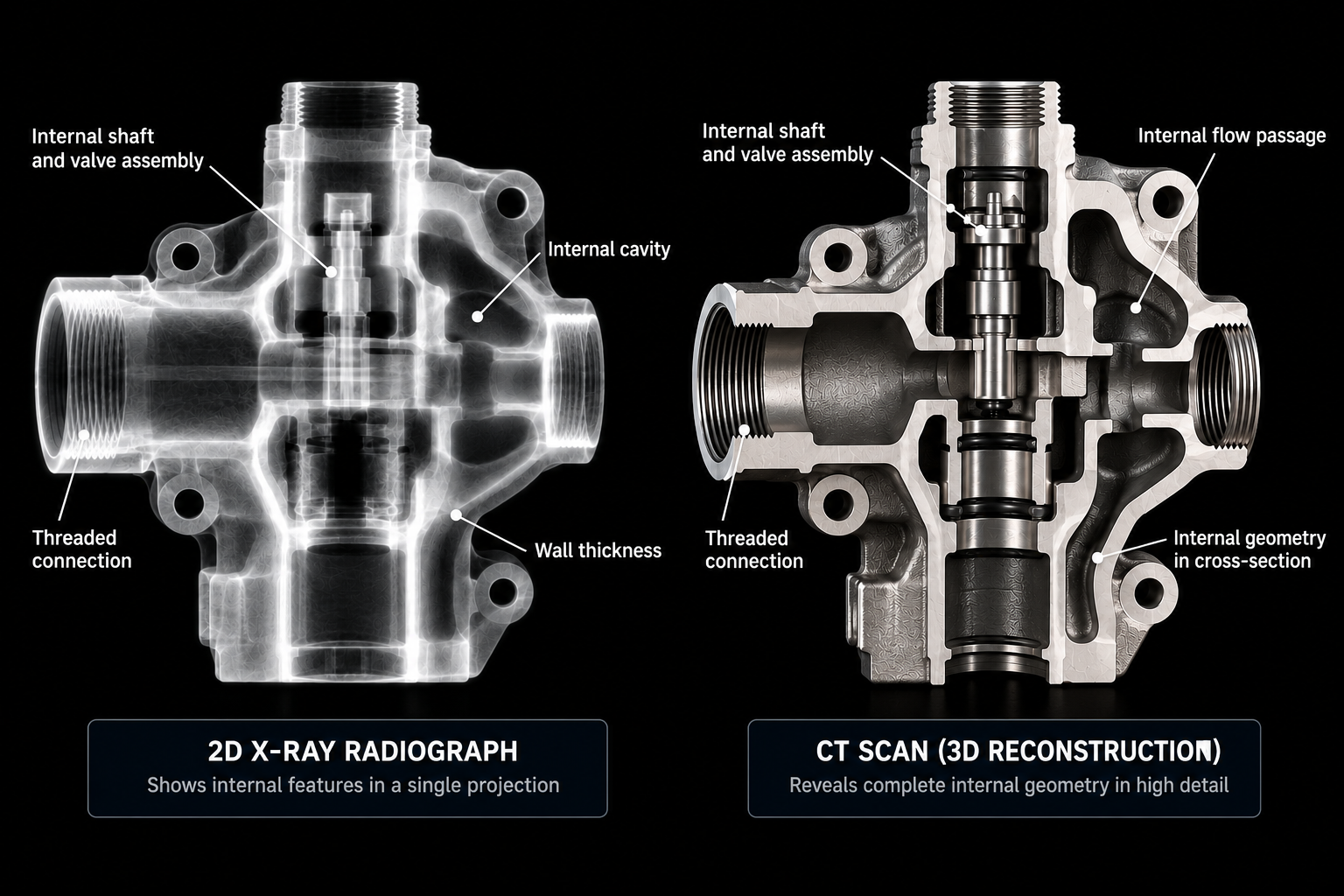
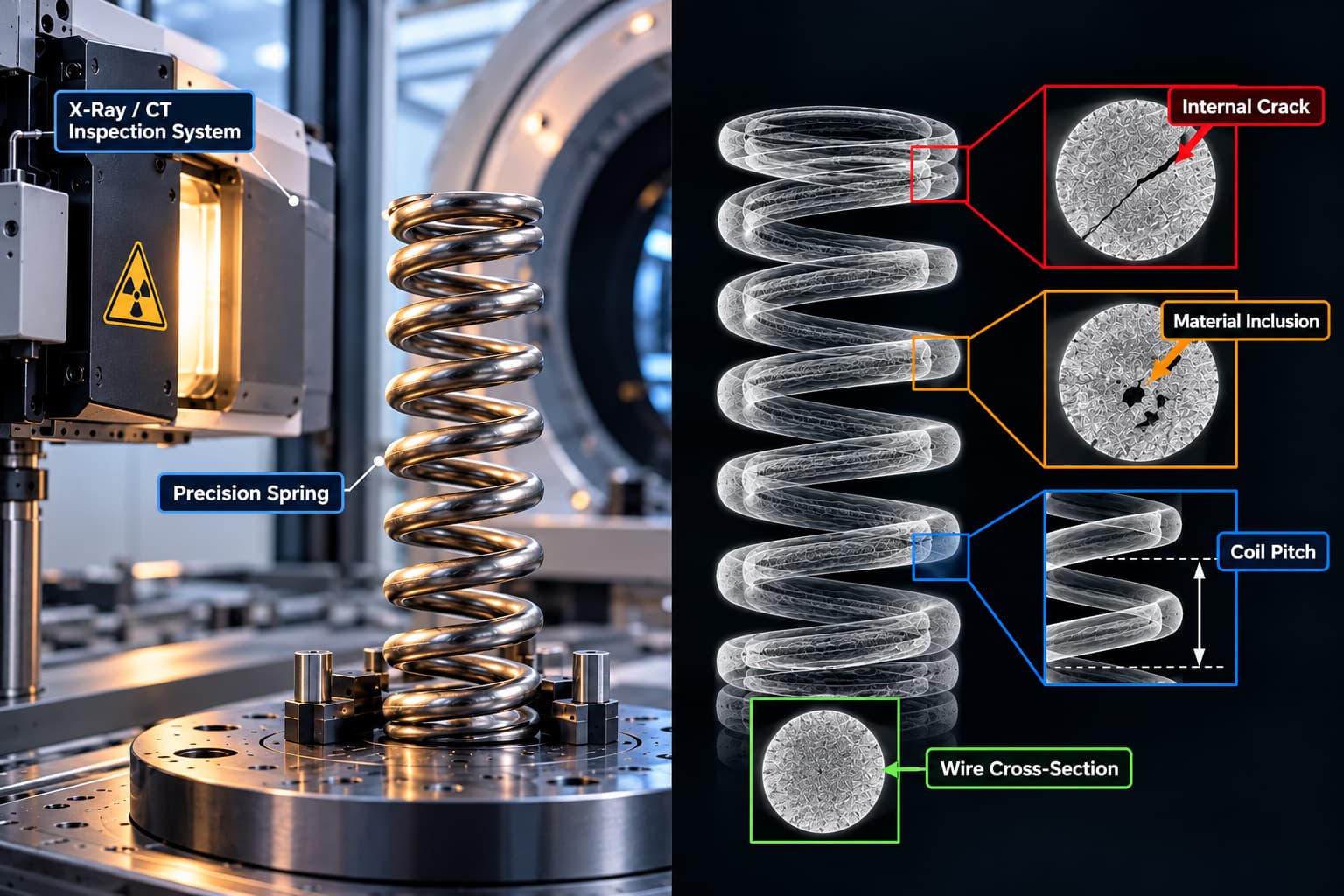
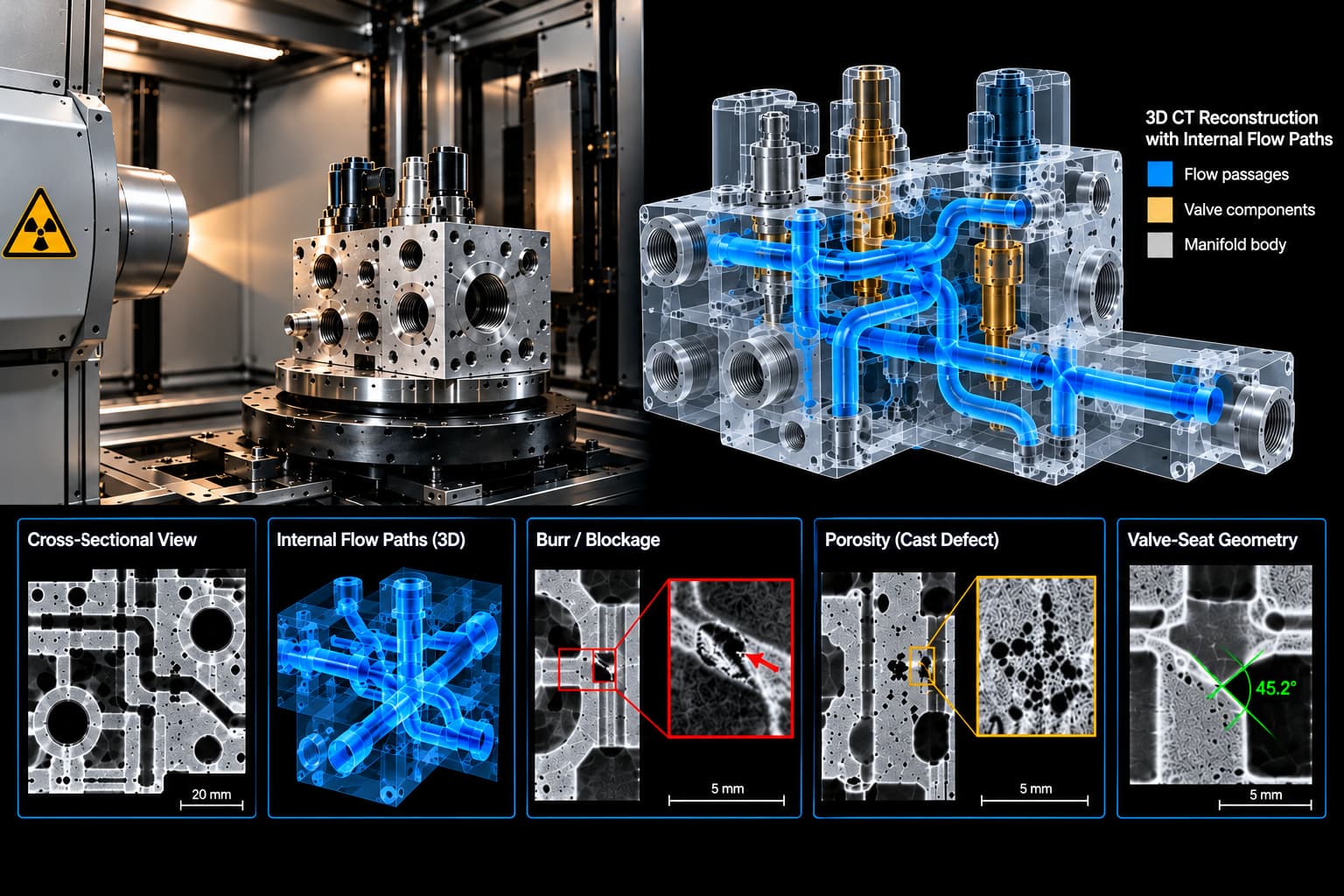
For a long time, there have been difficulties in inspecting large industrial components. Conventional computed tomography (CT) systems have restrictions regarding the size of items they can scan since they cannot deal efficiently with very large components.
The RoboCT system from XRAY-LAB GmbH & Co. KG has solved such problems due to its combination of robotics and superior X-ray imaging technology. The system enables scanning of the largest industrial parts at high resolution both in two and three dimensions.
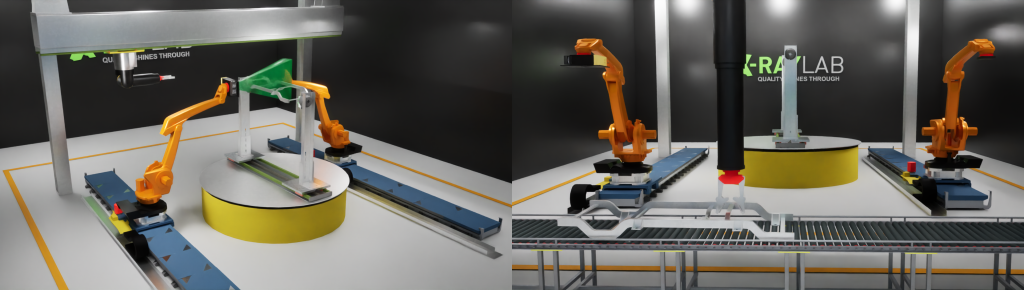
RoboCT performing a high-resolution X-ray inspection of an automotive chassis, capturing internal details with robotic precision.
What Is RoboCT?
RoboCT is an inline and at-line computed tomography system used exclusively for oversized and complicated parts. Contrary to typical CT devices, RoboCT does not entail any object movement; instead, its X-ray source and detector are installed on industrial robots that scan the component while making precise moves around it. As a result, RoboCT can scan oversized or unusually-shaped components that would be impossible to examine on traditional equipment. With the help of robotics, RoboCT creates conditions that minimize labor costs and increase efficiency through fewer scans than required by conventional CT devices.
The scanner is able to conduct 2D imaging of larger objects before going on to conduct high-resolution 3D scans in areas of interest. RoboCT has the ability to use a virtual twin of the object to plan out how to scan it, as well as to perform scans in real time using the most appropriate technique – whether that be laminography or 3D CT.
How RoboCT Works
RoboCT is revolutionary for the ability of the robotic arm to move the X-ray source and detector. This system is not bound to the conventional fixed gantry design but instead uses robots to move all around the object, thus capturing images at varying angles. This system is capable of scanning large and complicated objects that are difficult to fit into normal CT scanners because of their great height, length, and width.
In cases where the object is oversized, the RoboCT system will make use of the large field-of-view laminography method. The scanning involves translating sampling to obtain a 3D image. In cases where the object does not allow rotation, angled circular trajectories are made to capture images using several projections. Vertical circular 3D CT technique is used where scanning around an object is allowed.
With the incorporation of the digital twin, scanning trajectories can be accurately planned, and the entire process of the inspection is also monitored with utmost precision. With the help of such a digital twin, the scan trajectory is guaranteed to be optimal without any errors or requiring manual corrections. With RoboCT, you can leverage robotic movements and digital twin techniques for unparalleled precision.
Applications of RoboCT Across Industries
RoboCT is especially useful for industries that use large and complicated components. For instance, in the aerospace industry, the RoboCT can scan fuselage sections, wings, and satellites. Similarly, in the automotive industry, RoboCT can scan complete vehicle chassis, battery cases, and heavy engine parts. RoboCT would be ideal in the energy and construction industries because of its ability to scan wind turbine blades, transformers, and precast concrete panels. Additionally, rail and transportation industries can use RoboCT to scan wheel assemblies, bogies, and large electronics enclosures.
By enabling high-resolution inspection of large and complex parts, RoboCT ensures that critical defects are detected early, improving quality control and supporting compliance with industry safety standards.
Watch RoboCT in Action: See how RoboCT performs a full-scale X-ray inspection of a car chassis with unmatched precision and speed.
The Value of RoboCT
RoboCT provides unmatched flexibility by eliminating size constraints inherent in traditional CT systems. Manufacturers can inspect oversized and irregularly shaped parts without compromising on resolution or accuracy. The system allows initial 2D scans to identify areas of interest, followed by high-resolution 3D imaging of critical regions. This targeted approach saves time, reduces operational costs, and enhances decision-making.
Furthermore, RoboCT uses standard industrial robots, making it cost-effective to purchase and maintain. A single RoboCT system can replace several conventional CT machines, reducing both capital expenditure and energy consumption. By decreasing the number of machines required for inspection, RoboCT also contributes to sustainability initiatives and lowers the environmental footprint of industrial operations.
RoboCT must be taken into account by manufacturers where the dimensions of parts being tested go beyond the capacity of traditional CT scanners. RoboCT is well suited for both inline and at-line inspections and easily complements digital twin technologies, ensuring accuracy while minimizing human error in the process of scanning. Those looking for more efficient and sustainable methods of inspection are recommended to invest in RoboCT for non-destructive testing.
Conclusion
RoboCT represents the next generation of industrial computed tomography, combining robotic precision, advanced scanning capabilities, and digital twin technology to deliver high-resolution inspection of oversized and complex components. Its flexibility, efficiency, and cost-effectiveness make it an ideal solution for aerospace, automotive, energy, and other industries where quality and safety are paramount. By adopting RoboCT, manufacturers can enhance their quality assurance processes, reduce operational costs, and support sustainability goals, setting a new standard in non-destructive testing.
XRAY-LAB specializes in industrial computed tomography and non-destructive testing solutions. Their RoboCT system is a groundbreaking innovation, enabling accurate and efficient inspection of large and complex components across multiple industries.
Frequently Asked Questions
What Types Of Components Can RoboCT Inspect?
RoboCT can inspect oversized and complex components that traditional CT systems cannot handle, including aerospace fuselages, automotive chassis, wind turbine blades, and large energy industry parts.
How Does RoboCT Achieve High-Resolution Scans Of Large Parts?
RoboCT uses robotic X-ray source and detector movement combined with digital twin planning. It can perform 2D scans for overview and targeted 3D scans for critical areas, ensuring high resolution and accuracy.
Can RoboCT Be Integrated Into Production Lines?
Yes, RoboCT is designed for inline and at-line inspection, allowing seamless integration into manufacturing workflows while maintaining automation and minimal manual intervention.
What Is The Role Of The Digital Twin In RoboCT?
The digital twin enables precise scan trajectory planning, monitoring, and automatic selection of optimal scanning strategies. It reduces errors and improves throughput.
How Does RoboCT Support Sustainability Goals?
By replacing multiple conventional CT systems with a single robot-based setup, RoboCT reduces energy consumption, operational costs, and environmental footprint, contributing to decarbonization initiatives.